Amazon used long tail business models to drive disruptive innovation and challenge Netflix
Amazon: Long Tail Business Model and Disruptive Innovation
3/17/26
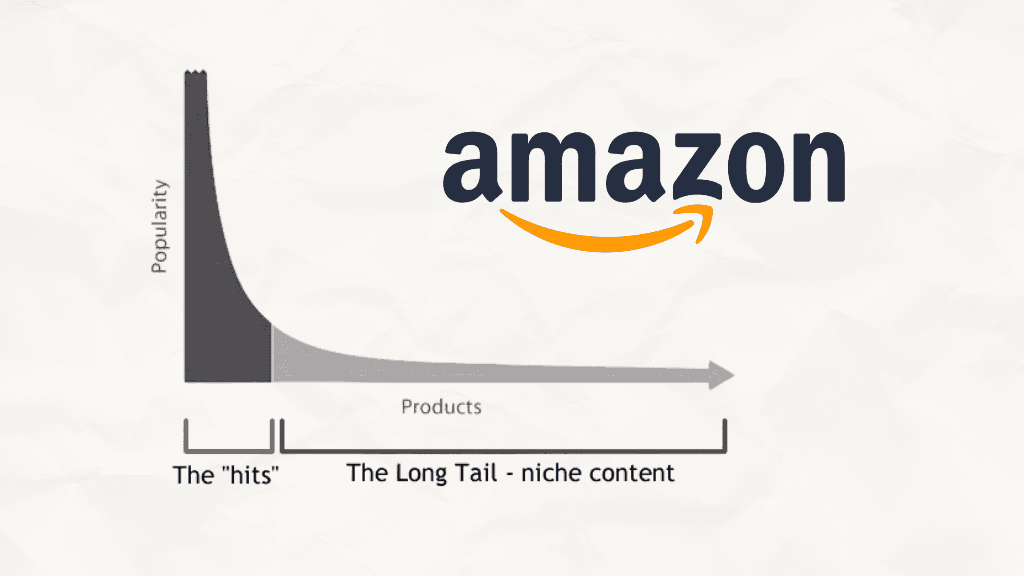
Long tail business models sell small quantities of a very large number of items. They are the antithesis of blockbuster business models, which sell large quantities of a few items.
As an Amazon employee once stated, “We sold more books today that didn’t sell at all yesterday than we sold today of all the books that did sell yesterday.” (Amazon was never known for its pithy marketing).
This illustrates the power of the long tail: many small sales across niche titles can add up to more than the hits.
In February of 2011, Amazon took its long tail strategy in a totally new direction by offering free streaming movies and TV shows to Prime members. The move was a direct slap at Netflix, which had moved increasingly toward popular blockbusters as its video streaming operations ramped up.
Amazon did not have nearly as many recent and popular releases in its free offer as Netflix, but for people who were open to Amazon’s viewing suggestions it was hard to beat free.
Why Amazon’s Prime Video move was a classic disruptive innovation
Amazon was able to make this model work because its long tail selections were much less expensive to license than blockbusters. It also had a totally different business model than Netflix, gaining a substantial bump in sales of physical products from people who signed up for Prime.
The offer targeted people who might not watch enough videos to justify a monthly Netflix subscription, or who simply did not consider signing up for a video service, which consequently enticed new customers to join Prime.
The foregoing represented a classic case of disruptive innovation — catering to people over-shot by existing offerings with an inexpensive and highly accessible service that excelled on a totally distinct set of performance criteria.
When the disruptor finds itself on defense
While Amazon played this creative offense, it found itself ironically on defense in its core book retailing business. Even as traditional rivals such as Borders imploded due to antiquated business models, the sleepy public library posed a threat to Amazon.
E-books were continuing their rapid ascent in publishing, and public libraries were moving quickly to offer patrons this option. Because the number to be lent was limited, library e-books were a poor alternative to Amazon for reading hot new releases, but they could be a cost-effective way for libraries to offer patrons access to hard-to-find books.
Tellingly, Amazon refused to make its Kindle e-book reader compatible with the format used for most public library lending. Public libraries did not have the marketing muscle to make readers aware of this option, and they might have moved more slowly than Internet giants, but as Amazon knew with its video offering, it was hard to beat free.
What this case tells us about business today
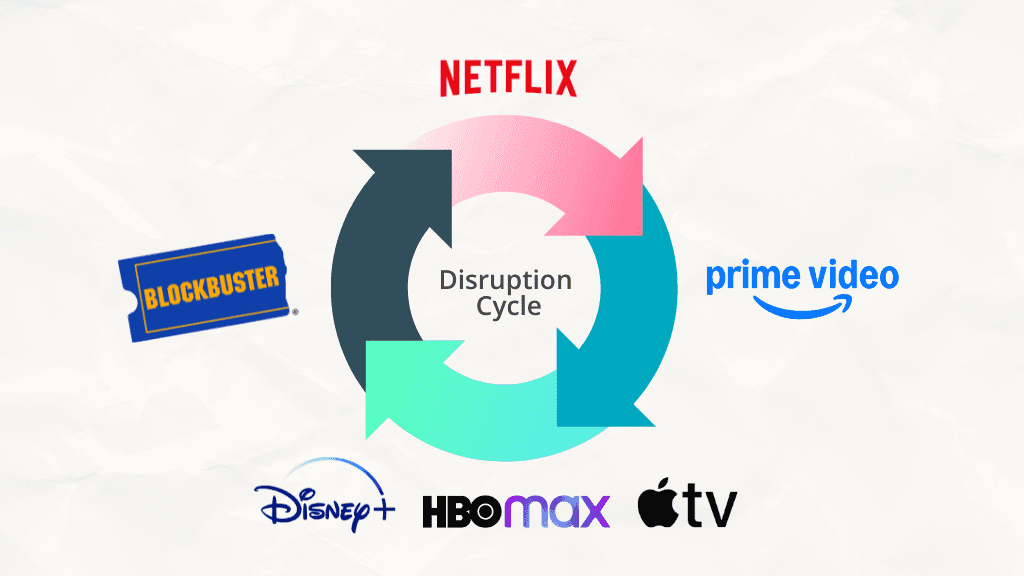
The streaming wars confirmed that disruption comes in successive waves. Netflix disrupted Blockbuster. Amazon challenged Netflix. Disney+, Apple TV+, and Max intensified the pressure further. Meanwhile, the industry has moved into a new phase marked by consolidation, bundling, and ad-supported tiers rather than the simple winner-take-all logic.
At the same time, the danger of moving too far up-market remains very much with us. As streamers and studios poured money into blockbuster franchises and prestige originals, they opened the door to other forms of competition built on very different economics.
YouTube now says viewers watch more than 1 billion hours of YouTube content on TVs daily, and that TV has become the primary device for YouTube viewing in the United States.
In other words, the living room did not simply become the domain of premium streaming apps; it also became hospitable to creator-led, lower-cost, and often more niche content. That is precisely the sort of flank exposure the theory would lead us to expect.
The broader market data point in the same direction. Nielsen reported that streaming accounted for 47.5 percent of all TV viewing in the United States in November 2024, the largest share on record at the time. It shows that once an industry is reshaped by disruption, the fight shifts to new questions: who controls aggregation, who wins the bundle, who owns the customer relationship, and who can profitably serve both hits and niches at the same time.
The Four Morals of This Story
Long tail business models create new markets, especially when they make experimentation with unfamiliar purchases easy and leverage new purchase occasions. Amazon did both these things with its video offering, thereby helping expand the overall size of the streaming market.
Disruptive innovation occurs in unstoppable waves. Just as Netflix disrupted Blockbuster, Amazon challenged Netflix. Then Disney+, Apple TV+, and Max changed the competitive terrain again. Today’s mix of mergers, ad tiers, and bundling partnerships is simply the latest expression of the same underlying pattern: disruption rarely ends with one disruptor; it triggers a continuing reshaping of the industry.
To avoid being swamped by waves of disruption, companies need to watch out for becoming vulnerable as they move up-market into blockbuster territory. As Netflix became increasingly focused on big hits, it exposed a flank for attack. That lesson extends well beyond streaming. Hollywood’s focus on franchise blockbusters has created room for creator-led media. When incumbents chase premium segments too aggressively, they frequently expose opportunities in the low end, in adjacent use cases, or in the long tail.
Long tail business models are compelling territory for disruptive innovation, but like any other business model they have a life cycle. If the disruptor does not stay fleet-footed and watchful, it can become the disruptee.
About The Author

Steve pioneered JTBD alongside Clayton Christensen and has led innovation work worldwide. He authored Jobs to Be Done: A Roadmap for Customer-Centered Innovation and four other books, and his thinking appears regularly in publications such as Harvard Business Review, Forbes, and The Financial Times.