SERVICE
Create Ongoing Capabilities
Create Ongoing Capabilities
Be an innovative leader who enables your organization


Ideas are the easy part of innovation. The hard part is creating a repeatable system to find, test, and scale them so that they get executed and have consistent success.
New Markets Advisors helps organizations build an innovation capability that outlasts any single project. For over a decade, we’ve helped innovation leaders replace one-off projects and occasional brainstorms with a structured method for finding and developing new opportunities.
5 books
5 books
published on innovation and growth strategy, including The Innovative Leader
published on innovation and growth strategy, including The Innovative Leader
30+
30+
Fortune 500 companies have trusted us
Fortune 500 companies have trusted us
5 books
published on innovation and growth strategy, including The Innovative Leader
30+
Fortune 500 companies have trusted us
Create Teams and Techniques that Make Innovation Repeatable and Reliable

Define Your Innovation Boundaries
Define Your Innovation Boundaries

Build Your Innovation Plan
Build Your Innovation Plan

Develop a Repeatable Process
Develop a Repeatable Process

Build a Culture of Innovation
Build a Culture of Innovation
What Our Clients Say About Us

"New Markets has strategic and entrepreneurial thinkers who understand the challenges that large, established companies have in executing innovation to drive growth. They bring great insight and clear thinking to their work with clients, along with very relevant work experience."
Deborah Arcoleo, Director of Adjacency Innovation

"New Markets’ approach to innovation is both insightful and resourceful. They uncovered insights that led to unique and relevant concepts. Leveraging experience in entrepreneurship and disruption, they crafted business models that could be explored quickly and with relatively low investment, which is a departure from most consultancies.”
Nate Hill, Emerging Idea Marketing Leader, Nestlé
Trusted by









Our Approach to Building Innovation Capabilities
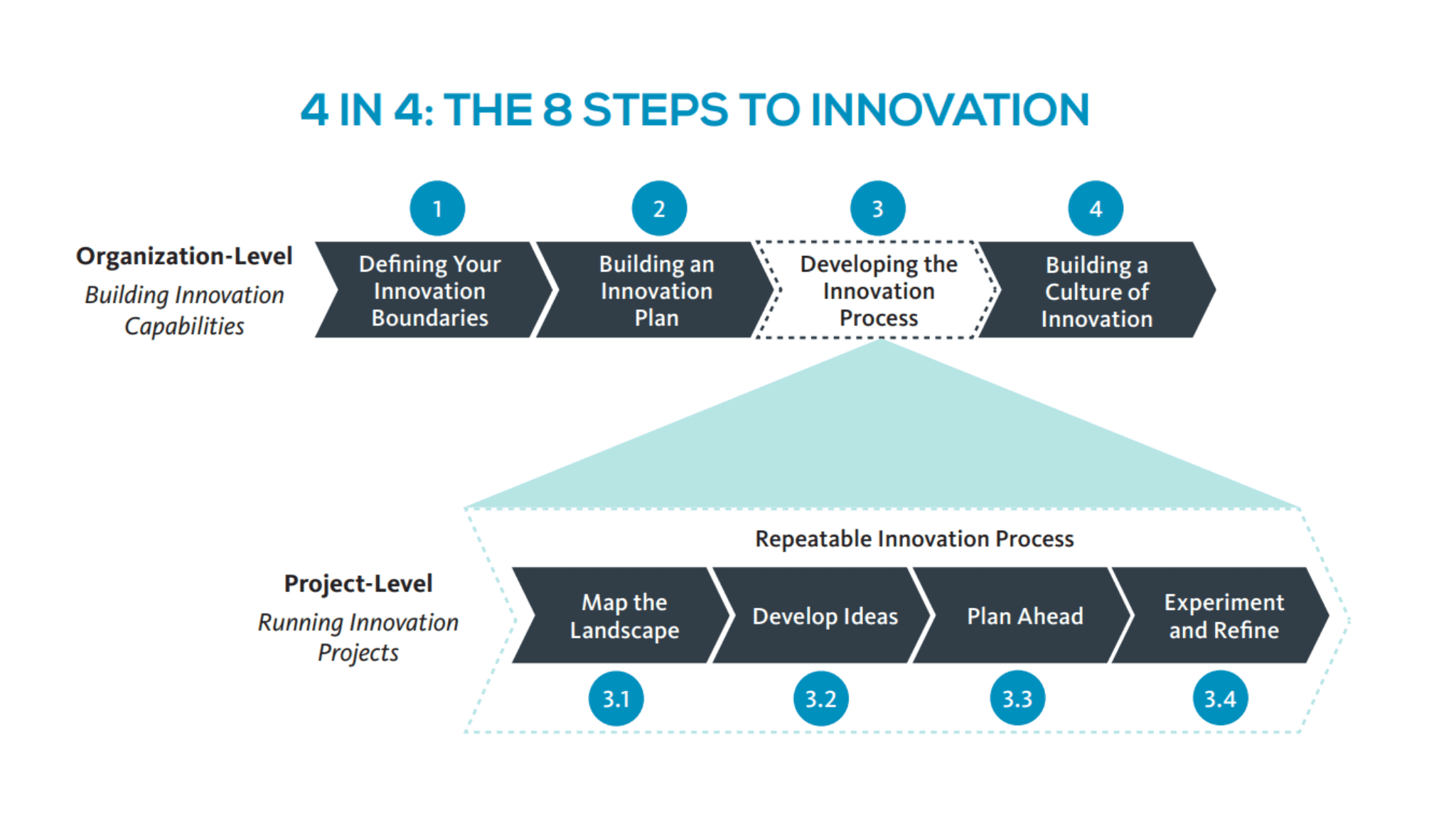
Best practices in innovation have moved far beyond creative brainstorming. The most consistent innovators have built a repeatable process for finding and effectively executing on new opportunities, again and again. Our method runs through four phases.
Best practices in innovation have moved far beyond creative brainstorming. The most consistent innovators have built a repeatable process for finding and effectively executing on new opportunities, again and again. Our method runs through four phases.
Define Your Innovation Boundaries
The first step is agreeing on why you’re innovating and how far you’re willing to go. Innovation isn’t an end in itself, although sometimes it’s treated that way. It’s a means to achieve premium pricing, market expansion, employee retention, or another concrete business objective. Clearly defining the strategic goal tightens the innovation target.
Align leadership on “why we’re innovating”, so goals can drive priorities and trade-off decisions
Set boundaries for what’s in scope, within the core business and in expansion areas
Map opportunities across all potential domains of innovation, such as customer experience, business model, channel strategy, and beyond – not just the product
Build Your Innovation Plan
Context matters: a sustainable plan leverages what's already working, avoids landmines, and fits company priorities. It should enable the right ideas to take root without dictating exactly what they are.
Carry your strategic choices forward: how much innovation is core vs. adjacent, and what payback periods are reasonable
Build a balanced portfolio across risk types and levels, timelines, and objectives, not investing too much in one long-shot bet
Estimate the resources funnel: the people and budget needed as ideas progress and get winnowed down
Address organizational changes, including what an innovation unit will and won’t do and how it should relate to the rest of the organization and its traditional approaches
Develop a Repeatable Innovation Process
A structured process tells teams where to focus, gives them the right information at the right time, and provides a proven way to assess opportunities, so success can repeat. We work through four activities per project, detailed further in our Innovating from the Inside Out working paper.
Map the landscape through discovery research, including direct conversations with customers about their underlying Jobs to be Done and latent needs, not just what they say they want
Run structured ideation: align on objectives first, root teams in strategic imperatives and marketplace dynamics, then enable individual reflection before group discussion
Plan the integration and handoff, weighing benefits and risks and building in scenarios for how circumstances might change
Experiment before you commit: rough prototypes, concept tests, and small pilots beat big bets. The British confectionary giant Cadbury learned this the hard way, investing tens of millions in a new factory to supply Poland with chocolate before discovering, too late, that local tastes ran to less-sweet chocolate than its home market the UK favored
Build a Culture Of Innovation
Culture change comes last deliberately: without the "hard" variables above already in place, "soft" culture shifts never stick, and culture change takes too long to gate everything else on its coming first.
Build a shared innovation language and a common grasp of innovative behaviors, before teams run projects solo
Protect people who take smart risks, with HR structures and management cover, not just encouragement
Share success stories peer-to-peer: the lunch room does more for a culture of innovation than any dedicated brainstorming room
Define Your Innovation Boundaries
The first step is agreeing on why you’re innovating and how far you’re willing to go. Innovation isn’t an end in itself, although sometimes it’s treated that way. It’s a means to achieve premium pricing, market expansion, employee retention, or another concrete business objective. Clearly defining the strategic goal tightens the innovation target.
Align leadership on “why we’re innovating”, so goals can drive priorities and trade-off decisions
Set boundaries for what’s in scope, within the core business and in expansion areas
Map opportunities across all potential domains of innovation, such as customer experience, business model, channel strategy, and beyond – not just the product
Build Your Innovation Plan
Context matters: a sustainable plan leverages what's already working, avoids landmines, and fits company priorities. It should enable the right ideas to take root without dictating exactly what they are.
Carry your strategic choices forward: how much innovation is core vs. adjacent, and what payback periods are reasonable
Build a balanced portfolio across risk types and levels, timelines, and objectives, not investing too much in one long-shot bet
Estimate the resources funnel: the people and budget needed as ideas progress and get winnowed down
Address organizational changes, including what an innovation unit will and won’t do and how it should relate to the rest of the organization and its traditional approaches
Develop a Repeatable Innovation Process
A structured process tells teams where to focus, gives them the right information at the right time, and provides a proven way to assess opportunities, so success can repeat. We work through four activities per project, detailed further in our Innovating from the Inside Out working paper.
Map the landscape through discovery research, including direct conversations with customers about their underlying Jobs to be Done and latent needs, not just what they say they want
Run structured ideation: align on objectives first, root teams in strategic imperatives and marketplace dynamics, then enable individual reflection before group discussion
Plan the integration and handoff, weighing benefits and risks and building in scenarios for how circumstances might change
Experiment before you commit: rough prototypes, concept tests, and small pilots beat big bets. The British confectionary giant Cadbury learned this the hard way, investing tens of millions in a new factory to supply Poland with chocolate before discovering, too late, that local tastes ran to less-sweet chocolate than its home market the UK favored
Build a Culture of Innovation
Culture change comes last deliberately: without the "hard" variables above already in place, "soft" culture shifts never stick, and culture change takes too long to gate everything else on its coming first.
Build a shared innovation language and a common grasp of innovative behaviors, before teams run projects solo
Protect people who take smart risks, with HR structures and management cover, not just encouragement
Share success stories peer-to-peer: the lunch room does more for a culture of innovation than any dedicated brainstorming room
What You'll Get From Our Innovation Capability Building
Across a typical engagement, you'll get:
Innovation Boundary Statement: aligns leadership on why you’re innovating and how far you’ll go
Innovation Plan: a balanced, risk-weighted project portfolio built around your real constraints
Repeatable Innovation Process: a structured method for developing and testing ideas, from discovery through experimentation
Culture Roadmap: the shifts that make the changes stick after we leave
Together, these give you a system for innovation that keeps generating results, not just a memory of one good workshop.
Across a typical engagement, you'll get:
Innovation Boundary Statement: aligns leadership on why you're innovating and how far you'll go
Innovation Plan: a balanced, risk-weighted project portfolio built around your real constraints
Repeatable Innovation Process: a structured method for developing and testing ideas, from discovery through experimentation
Culture Roadmap: the shifts that make the process stick after we leave
Together, these give you a system for innovation that keeps generating results, not just a memory of one good workshop.

Resources
Resources
FEATURED WORKING PAPER
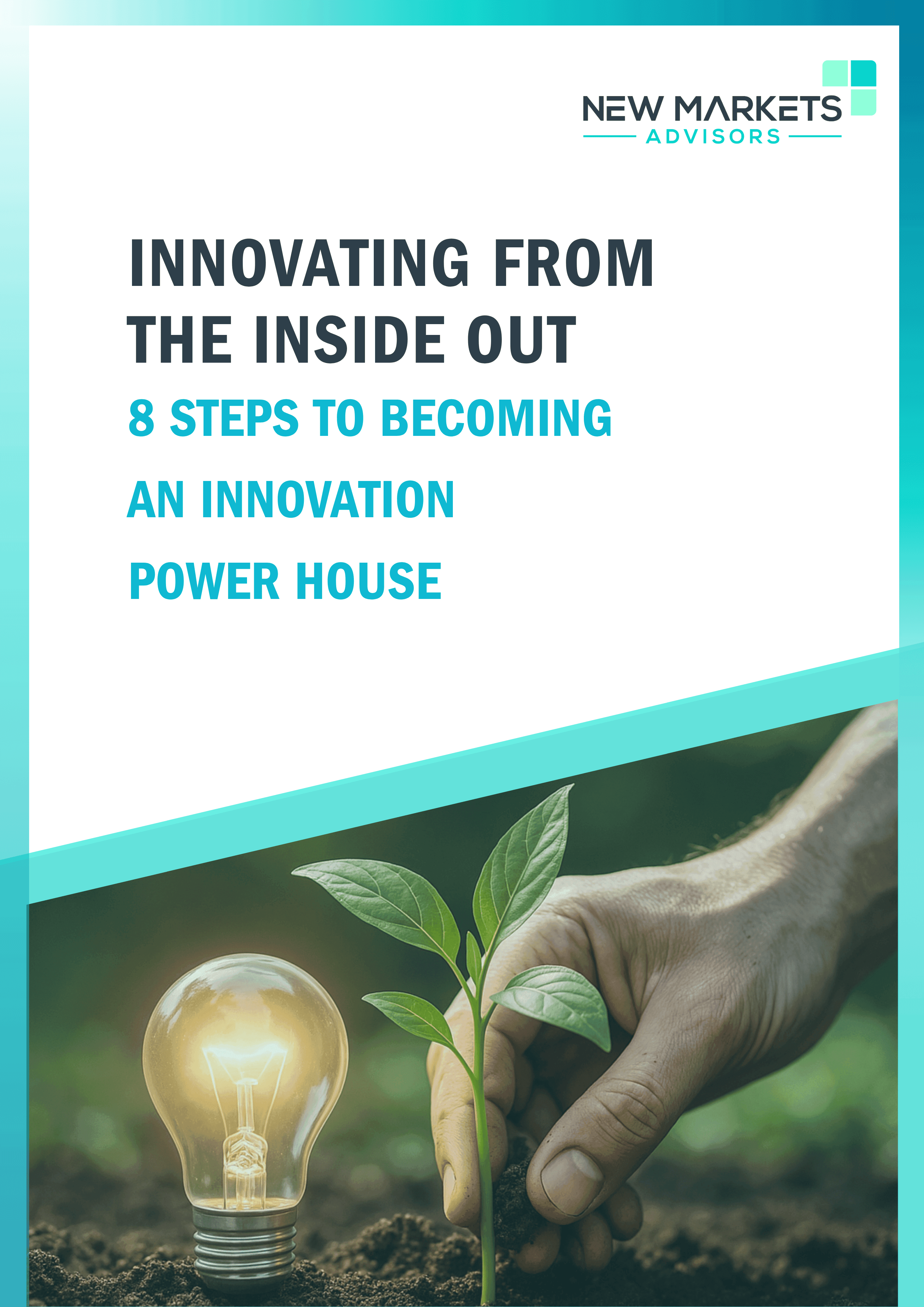
Innovating From the Inside Out: 8 Steps to Becoming an Innovation Powerhouse
Through our history of helping organizations large and small tackle their innovation needs, we have identified critical steps to bolster a company’s innovativeness. This working paper outlines both organizational-level and on-the-ground steps that you can take to be more innovative tomorrow.
FEATURED BOOK
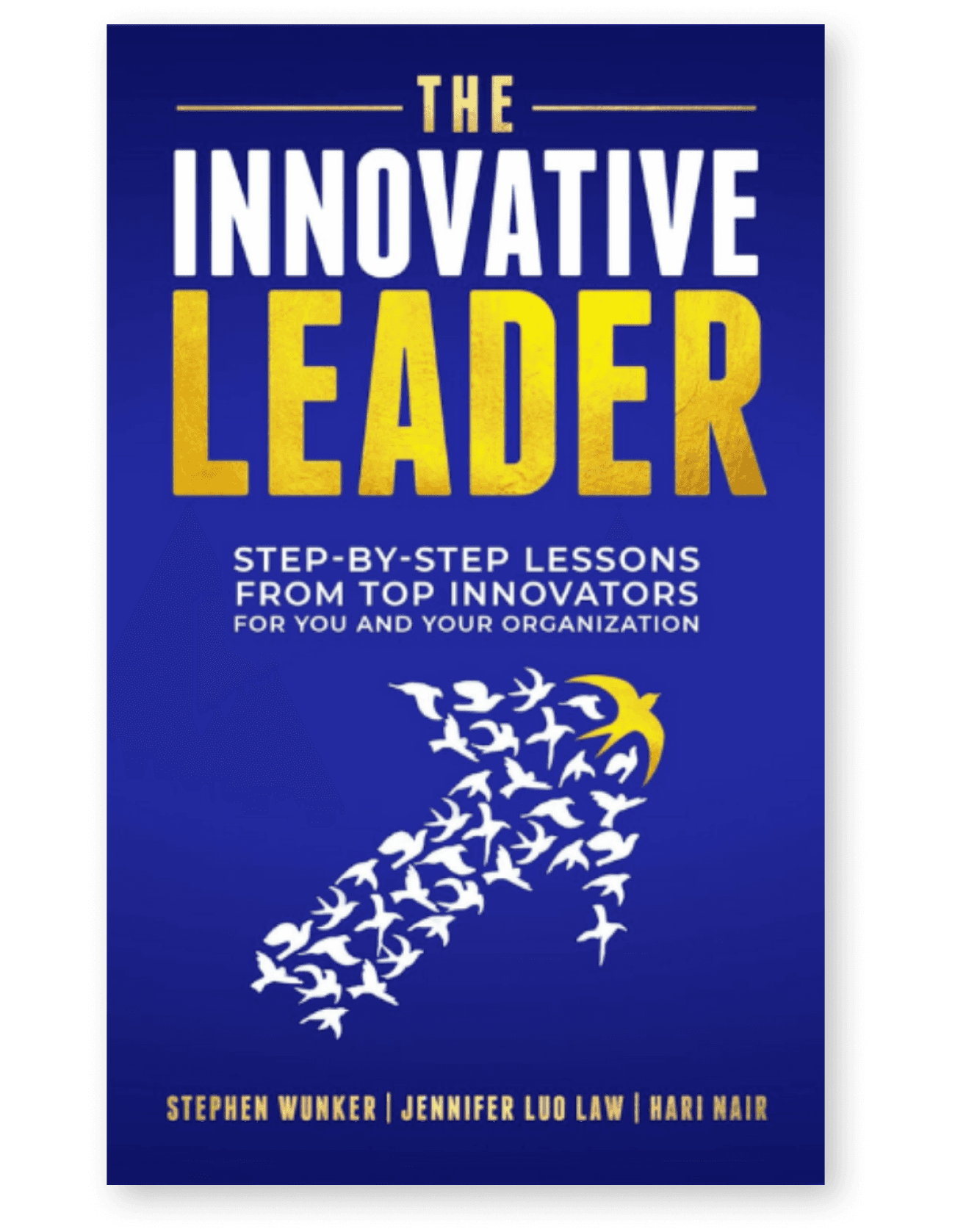
An Innovative Leader Makes Innovation Happen, Consistently
This book lays out a clear process for you and your organization to follow. Featuring interviews with innovative leaders such as Microsoft’s Satya Nadella and Levi’s Chip Bergh, it begins with you as a leader, helping you understand your own developmental strengths and areas for growth.

FEATURED WORKING PAPER
Innovating From the Inside Out: 8 Steps to Becoming an Innovation Powerhouse
Through our history of helping organizations large and small tackle their innovation needs, we have identified critical steps to bolster a company’s innovativeness. This working paper outlines both organizational-level and on-the-ground steps that you can take to be more innovative tomorrow.
FEATURED BOOK
An Innovative Leader Makes Innovation Happen, Consistently
This book lays out a clear process for you and your organization to follow. Featuring interviews with innovative leaders such as Microsoft’s Satya Nadella and Levi’s Chip Bergh, it begins with you as a leader, helping you understand your own developmental strengths and areas for growth.
FEATURED WORKING PAPER
Innovating From the Inside Out: 8 Steps to Becoming an Innovation Powerhouse
Through our history of helping organizations large and small tackle their innovation needs, we have identified critical steps to bolster a company’s innovativeness. This working paper outlines both organizational-level and on-the-ground steps that you can take to be more innovative tomorrow.
FEATURED BOOK
An Innovative Leader Makes Innovation Happen, Consistently
This book lays out a clear process for you and your organization to follow. Featuring interviews with innovative leaders such as Microsoft’s Satya Nadella and Levi’s Chip Bergh, it begins with you as a leader, helping you understand your own developmental strengths and areas for growth.
FEATURED WORKING PAPER
Innovating From the Inside Out: 8 Steps to Becoming an Innovation Powerhouse
Through our history of helping organizations large and small tackle their innovation needs, we have identified critical steps to bolster a company’s innovativeness. This working paper outlines both organizational-level and on-the-ground steps that you can take to be more innovative tomorrow.
FEATURED BOOK
An Innovative Leader Makes Innovation Happen, Consistently
This book lays out a clear process for you and your organization to follow. Featuring interviews with innovative leaders such as Microsoft’s Satya Nadella and Levi’s Chip Bergh, it begins with you as a leader, helping you understand your own developmental strengths and areas for growth.
FEATURED BOOK
An Innovative Leader Makes Innovation Happen, Consistently
This book lays out a clear process for you and your organization to follow. Featuring interviews with innovative leaders such as Microsoft’s Satya Nadella and Levi’s Chip Bergh, it begins with you as a leader, helping you understand your own developmental strengths and areas for growth.
FEATURED WORKING PAPER
Innovating From the Inside Out: 8 Steps to Becoming an Innovation Powerhouse
Through our history of helping organizations large and small tackle their innovation needs, we have identified critical steps to bolster a company’s innovativeness. This working paper outlines both organizational-level and on-the-ground steps that you can take to be more innovative tomorrow.
FEATURED BOOK
An Innovative Leader Makes Innovation Happen, Consistently
This book lays out a clear process for you and your organization to follow. Featuring interviews with innovative leaders such as Microsoft’s Satya Nadella and Levi’s Chip Bergh, it begins with you as a leader, helping you understand your own developmental strengths and areas for growth.
FEATURED WORKING PAPER
Innovating From the Inside Out: 8 Steps to Becoming an Innovation Powerhouse
Through our history of helping organizations large and small tackle their innovation needs, we have identified critical steps to bolster a company’s innovativeness. This working paper outlines both organizational-level and on-the-ground steps that you can take to be more innovative tomorrow.
FEATURED BOOK
An Innovative Leader Makes Innovation Happen, Consistently
This book lays out a clear process for you and your organization to follow. Featuring interviews with innovative leaders such as Microsoft’s Satya Nadella and Levi’s Chip Bergh, it begins with you as a leader, helping you understand your own developmental strengths and areas for growth.
FEATURED WORKING PAPER
Innovating From the Inside Out: 8 Steps to Becoming an Innovation Powerhouse
Through our history of helping organizations large and small tackle their innovation needs, we have identified critical steps to bolster a company’s innovativeness. This working paper outlines both organizational-level and on-the-ground steps that you can take to be more innovative tomorrow.
FEATURED BOOK
An Innovative Leader Makes Innovation Happen, Consistently
This book lays out a clear process for you and your organization to follow. Featuring interviews with innovative leaders such as Microsoft’s Satya Nadella and Levi’s Chip Bergh, it begins with you as a leader, helping you understand your own developmental strengths and areas for growth.
FEATURED WORKING PAPER
Innovating From the Inside Out: 8 Steps to Becoming an Innovation Powerhouse
Through our history of helping organizations large and small tackle their innovation needs, we have identified critical steps to bolster a company’s innovativeness. This working paper outlines both organizational-level and on-the-ground steps that you can take to be more innovative tomorrow.
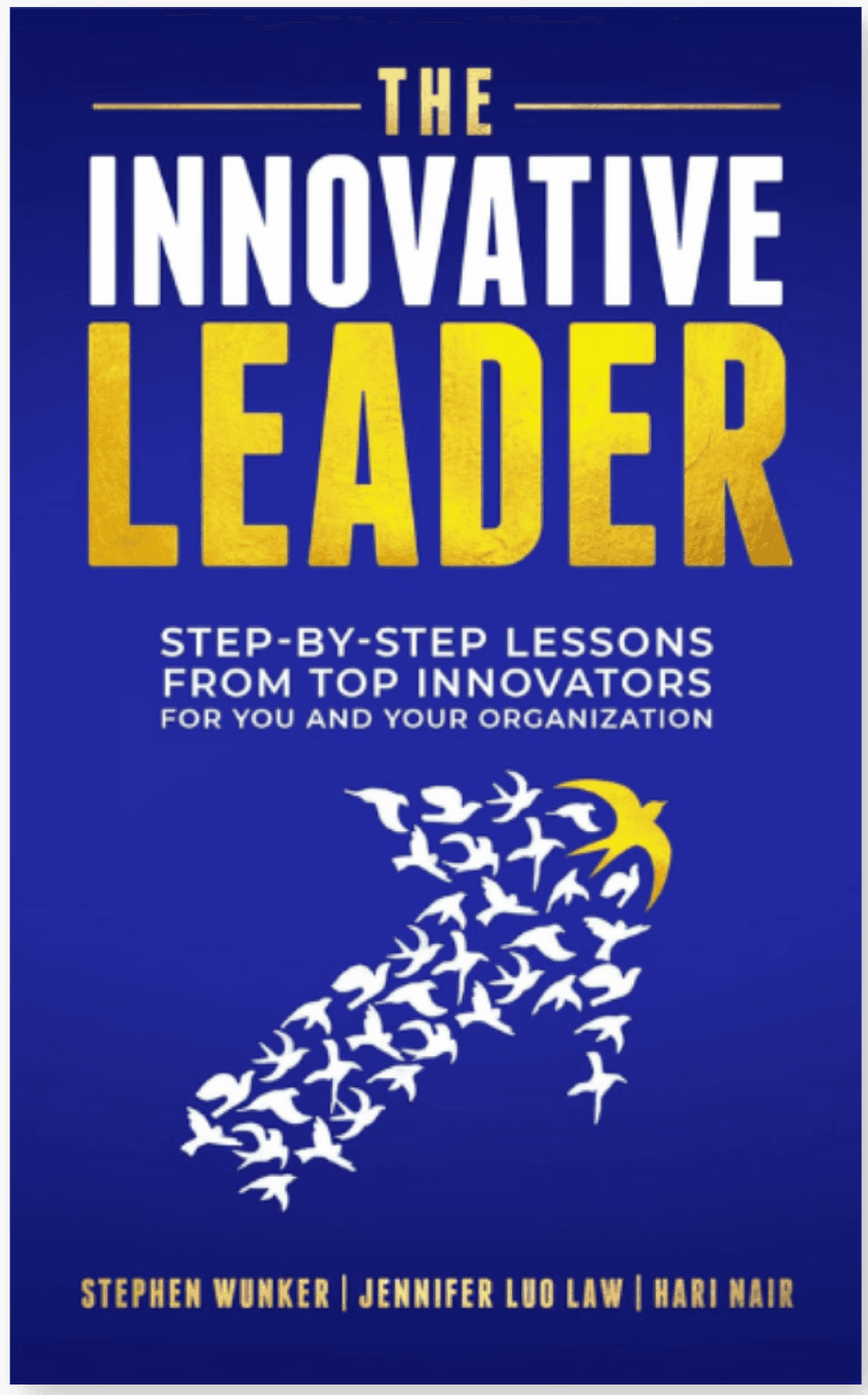
FEATURED BOOK
An Innovative Leader Makes Innovation Happen, Consistently
This book lays out a clear process for you and your organization to follow. Featuring interviews with innovative leaders such as Microsoft’s Satya Nadella and Levi’s Chip Bergh, it begins with you as a leader, helping you understand your own developmental strengths and areas for growth.
FEATURED WORKING PAPER
Innovating From the Inside Out: 8 Steps to Becoming an Innovation Powerhouse
Through our history of helping organizations large and small tackle their innovation needs, we have identified critical steps to bolster a company’s innovativeness. This working paper outlines both organizational-level and on-the-ground steps that you can take to be more innovative tomorrow.
FEATURED BOOK
An Innovative Leader Makes Innovation Happen, Consistently
This book lays out a clear process for you and your organization to follow. Featuring interviews with innovative leaders such as Microsoft’s Satya Nadella and Levi’s Chip Bergh, it begins with you as a leader, helping you understand your own developmental strengths and areas for growth.
FEATURED WORKING PAPER
Innovating From the Inside Out: 8 Steps to Becoming an Innovation Powerhouse
Through our history of helping organizations large and small tackle their innovation needs, we have identified critical steps to bolster a company’s innovativeness. This working paper outlines both organizational-level and on-the-ground steps that you can take to be more innovative tomorrow.
FEATURED BOOK
An Innovative Leader Makes Innovation Happen, Consistently
This book lays out a clear process for you and your organization to follow. Featuring interviews with innovative leaders such as Microsoft’s Satya Nadella and Levi’s Chip Bergh, it begins with you as a leader, helping you understand your own developmental strengths and areas for growth.
FEATURED WORKING PAPER
Innovating From the Inside Out: 8 Steps to Becoming an Innovation Powerhouse
Through our history of helping organizations large and small tackle their innovation needs, we have identified critical steps to bolster a company’s innovativeness. This working paper outlines both organizational-level and on-the-ground steps that you can take to be more innovative tomorrow.
FEATURED BOOK
An Innovative Leader Makes Innovation Happen, Consistently
This book lays out a clear process for you and your organization to follow. Featuring interviews with innovative leaders such as Microsoft’s Satya Nadella and Levi’s Chip Bergh, it begins with you as a leader, helping you understand your own developmental strengths and areas for growth.
FEATURED WORKING PAPER
Innovating From the Inside Out: 8 Steps to Becoming an Innovation Powerhouse
Through our history of helping organizations large and small tackle their innovation needs, we have identified critical steps to bolster a company’s innovativeness. This working paper outlines both organizational-level and on-the-ground steps that you can take to be more innovative tomorrow.
How We Compare
Most firms that help companies "build innovation capability" fall into two camps: large consultancies selling standardized frameworks and generic "innovation labs," or boutique creativity shops that run an energizing workshop and then leave. Neither builds something that outlasts the engagement.
Where New Markets Advisors Stands Out
JTBD-first diagnosis: your boundaries, plan, and pipeline are grounded in real customer Jobs to be Done, identified through direct research with your customers
Built to outlast the engagement: we install a repeatable process and the internal muscle to keep running it after we leave
Senior-led, boutique teams: you work directly with the experienced consultants and partners who scoped the engagement, from kickoff to rollout
Built for corporate reality: our approach is designed around the governance, incentives, and risk tolerance of a large organization
Portfolio discipline: we help you balance bets across risk levels and time horizons, so no single project has to carry the whole program
A Quick Comparison: New Markets Advisors vs Traditional Large Consulting Firms
vs. Traditional Consultants
Durable, organization-specific innovation capability
Core Strength
Standardized frameworks, large-scale rollout
JTBD-driven diagnosis tailored to your culture and constraints
Approach
One-size-fits-all methodology, generic workshops
Senior-led, boutique teams
Team Structure
Large, junior-heavy delivery teams
Embedded process, portfolio, and culture change
Focus
Workshops and framework deliverables
JTBD-First, Customer-Backed Approach: We start with customer motivations and outcomes, not with features, technologies, or internal brainstorming.
Tailored Frameworks, Not Templates: Every engagement begins with a diagnostic of your market, culture, and constraints. We design solutions around your business, not a rigid methodology.
Speed and Focus: We deliver decision-ready product roadmaps in weeks, not quarters. Our teams move fast without the heavy overhead of larger firms.
Senior-Led Engagements: You work directly with experienced consultants and partners, not layers of junior staff. That means sharper insights and higher accountability.
Cross-Industry Creativity: We use analogies from other sectors to inspire breakthroughs, a strength rarely seen in process-heavy environments.
Where New Markets Advisors Stands Out
Most firms that help companies "build innovation capability" fall into two camps: large consultancies selling standardized frameworks and generic "innovation labs," or boutique creativity shops that run an energizing workshop and then leave. Neither builds something that outlasts the engagement.
Bottom line: if you need a large-scale rollout of a standardized innovation framework across many business units at once, a large consultancy's scale may serve you better. If you need a capability that's well-tailored for how your organization actually works, that's where we fit.
Where New Markets Advisors Stands Out
JTBD-first diagnosis: we ground your boundaries, plan, and pipeline in real customer jobs, not a generic ideation sprint
Built to outlast the engagement: we install a repeatable process and the muscle to run it, not a framework that gets shelved after the kickoff deck
Senior-led, boutique teams: you work directly with experienced consultants and partners, not layers of junior staff executing a template
Corporate-fit, not startup mimicry: built for the governance, incentives, and risk tolerance of a large organization
Portfolio discipline: a balanced mix of bets across risk levels and time horizons, not one long-shot project
Why It Matters
Innovation ranked as the single most important strategic factor for growth in McKinsey's recently global CEO survey: the largest share of respondents (39%) picked it over customer relationships, talent, or operational excellence. But wanting to innovate and being able to are two different things.
#1 Strategic Factor
#1 Strategic Factor
for growth cited by companies in McKinsey's global survey
for growth cited by companies in McKinsey's global survey
+2.4 annual outperformance
+2.4 annual outperformance
vs. the broader market for BCG's 50 Most Innovative Companies, sustained over 20 years
vs. the broader market for BCG's 50 Most Innovative Companies, sustained over 20 years
In this high-failure, resource-constrained environment, organizations with strong innovation capabilities stand apart. Those that can systematically understand their customers' needs, test ideas quickly, and scale winning concepts gain a durable, compounding advantage.










our Industries
Trusted by Global Leaders for Building Innovation Capabilities
Our innovation capability clients range from international leaders to promising startups across our four key industries:

Frequently Asked Questions
What does "building innovation capability" mean?
It means installing a repeatable system for finding and developing new ideas, rather than relying on a single project or occasional brainstorm. It requires alignment across four areas: a clear innovation strategy, a balanced innovation plan, a structured process for developing and testing ideas, and a culture that supports smart risk-taking.
What are the steps to building a repeatable innovation process?
How do you build a lasting culture of innovation?
Why do most corporate innovation programs fail?
How long does it take to build innovation capability?
How is Jobs to Be Done used in building innovation capability?
What does "building innovation capability" mean?
Growth strategy consulting identifies and prioritizes your routes to profitable growth. In doing so, this helps you make hard choices about where to focus your time and investment, and helps identify risks that you can mitigate upfront
Which growth strategy framework does New Markets Advisors use?
How do you build a lasting culture of innovation?
Why do most corporate innovation programs fail?
How long does it take to build innovation capability?
How is Jobs to Be Done used in building innovation capability?

Connect With Us
Let's Start Making Your Organization More Innovative Today
Fill out the form below to start the conversation about working with New Markets Advisors

Connect With Us
Let's Start Making Your Organization More Innovative Today
Fill out the form below to start the conversation about working with New Markets Advisors

Our Approach to Building Innovation Capabilities
Best practices in innovation have moved far beyond creative brainstorming. The most consistent innovators don't rely on chance. They've built a repeatable process for finding new opportunities, again and again. Our method runs through four phases.
Define Your Innovation Boundaries
The first step is agreeing on why you’re innovating and how far you’re willing to go. Innovation isn’t an end in itself, although sometimes it’s treated that way. It’s a means to achieve premium pricing, market expansion, employee retention, or another concrete business objective. Clearly defining the strategic goal tightens the innovation target.
Align leadership on “why we’re innovating”, so goals can drive priorities and trade-off decisions
Set boundaries for what’s in scope, within the core business and in expansion areas
Map opportunities across all potential domains of innovation, such as customer experience, business model, channel strategy, and beyond – not just the product
Build Your Innovation Plan
Context matters: a sustainable plan leverages what's already working, avoids landmines, and fits company priorities. It should enable the right ideas to take root without dictating exactly what they are.
Carry your strategic choices forward: how much innovation is core vs. adjacent, and what payback periods are reasonable
Build a balanced portfolio across risk types and levels, timelines, and objectives, not investing too much in one long-shot bet
Estimate the resources funnel: the people and budget needed as ideas progress and get winnowed down
Address organizational changes, including what an innovation unit will and won’t do and how it should relate to the rest of the organization and its traditional approaches
Develop a Repeatable Innovation Process
A structured process tells teams where to focus, gives them the right information at the right time, and provides a proven way to assess opportunities, so success can repeat. We work through four activities per project, detailed further in our Innovating from the Inside Out working paper.
Map the landscape through discovery research, including direct conversations with customers about their underlying Jobs to be Done and latent needs, not just what they say they want
Run structured ideation: align on objectives first, root teams in strategic imperatives and marketplace dynamics, then enable individual reflection before group discussion
Plan the integration and handoff, weighing benefits and risks and building in scenarios for how circumstances might change
Experiment before you commit: rough prototypes, concept tests, and small pilots beat big bets. The British confectionary giant Cadbury learned this the hard way, investing tens of millions in a new factory to supply Poland with chocolate before discovering, too late, that local tastes ran to less-sweet chocolate than its home market the UK favored
Build a Culture of Innovation
Culture change comes last deliberately: without the "hard" variables above already in place, "soft" culture shifts never stick, and culture change takes too long to gate everything else on its coming first.
Build a shared innovation language and a common grasp of innovative behaviors, before teams run projects solo
Protect people who take smart risks, with HR structures and management cover, not just encouragement
Share success stories peer-to-peer: the lunch room does more for a culture of innovation than any dedicated brainstorming room
our Industries
Trusted by Global Leaders for Building Innovation Capabilities
Our innovation capability clients range from international leaders to promising startups across our four key industries:
Frequently Asked Questions
What does "building innovation capability" mean?
It means installing a repeatable system for finding and developing new ideas, rather than relying on a single project or occasional brainstorm. It requires alignment across four areas: a clear innovation strategy, a balanced innovation plan, a structured process for developing and testing ideas, and a culture that supports smart risk-taking.
What are the steps to building a repeatable innovation process?
How do you build a lasting culture of innovation?
Why do most corporate innovation programs fail?
How long does it take to build innovation capability?
How is Jobs to Be Done used in building innovation capability?
Why It Matters
Innovation ranked as the single most important strategic factor for growth in McKinsey's recently global CEO survey: the largest share of respondents (39%) picked it over customer relationships, talent, or operational excellence. But wanting to innovate and being able to are two different things.
#1 Strategic Factor
for growth cited by companies in McKinsey's global survey
+2.4 annual outperformance
vs. the broader market for BCG's 50 Most Innovative Companies, sustained over 20 years
20% → 3%
the share of companies BCG rates "innovation ready," even as 83% still rank it a top-three priority
In this high-failure, resource-constrained environment, organizations with strong innovation capabilities stand apart. Those that can systematically understand their customers' needs, test ideas quickly, and scale winning concepts gain a durable, compounding advantage.
A Quick Comparison: New Markets Advisors vs Traditional Large Consulting Firms
vs. Traditional Consultants
Durable, organization-specific innovation capability
Standardized frameworks, large-scale rollout
Core Strength
JTBD-driven diagnosis tailored to your culture and constraints
One-size-fits-all methodology, generic workshops
Approach
Senior-led, boutique teams
Large, junior-heavy delivery teams
Team Structure
Embedded process, portfolio, and culture change
Workshops and framework deliverables
Focus
A Quick Comparison: New Markets Advisors vs Traditional Large Consulting Firms
vs. Traditional Consultants
Durable, organization-specific innovation capability
Standardized frameworks, large-scale rollout
Core Strength
JTBD-driven diagnosis tailored to your culture and constraints
One-size-fits-all methodology, generic workshops
Approach
Senior-led, boutique teams
Large, junior-heavy delivery teams
Team Structure
Embedded process, portfolio, and culture change
Workshops and framework deliverables
Focus

Our Offices
50 Franklin St
2nd Floor
Boston, MA 02110
USA
151 San Francisco St
Suite 200
San Juan, PR 00901 Puerto Rico
Rua Antónia Andrade 4
3 Direito
1170-025 Lisboa
Portugal

Our Offices
50 Franklin St
2nd Floor
Boston, MA 02110
USA
151 San Francisco St
Suite 200
San Juan, PR 00901 Puerto Rico
Rua Antónia Andrade 4
3 Direito
1170-025 Lisboa
Portugal
Our Offices
50 Franklin St
2nd Floor
Boston, MA 02110
USA
151 San Francisco St
Suite 200
San Juan, PR 00901 Puerto Rico
Rua Antónia Andrade 4
3 Direito
1170-025 Lisboa
Portugal
Our Offices
50 Franklin St
2nd Floor
Boston, MA 02110 USA
151 San Francisco St
Suite 200
San Juan, PR 00901 Puerto Rico
Rua Antónia Andrade 4
3 Direito
1170-025 Lisboa
Portugal
Get In Touch
+1 617 936 4035
info@newmarketsadvisors.com