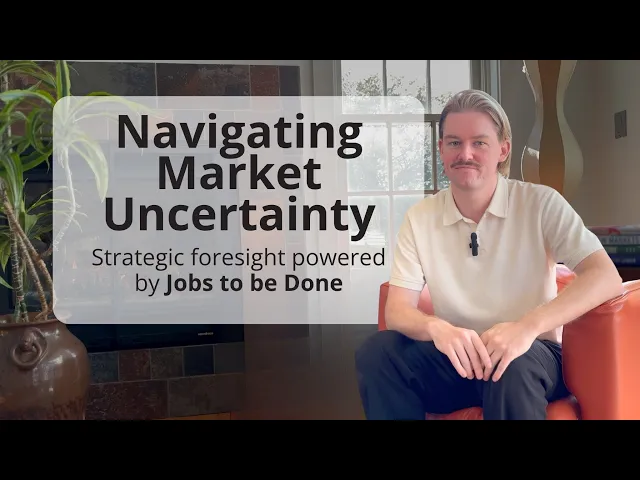
FutureCasting: A Practical Method for Corporate Strategic Foresight


Executive Takeaway 💡
FutureCasting is a foresight methodology that helps organizations explore alternative futures, map uncertainty, and translate long-term market shifts into near-term strategic actions. By identifying emerging customer needs, competitive threats, and innovation opportunities, FutureCasting signals to leadership teams when strategy will need to adapt, and how to effectively navigate periods of change.
Why FutureCasting Is Important for Your Company’s Corporate Strategy
Plotting the future has long been something executives have sought to master. Some have found success crafting “big picture” strategic visions, but they often feel too abstract to act on. Those that are effective at mapping the next steps tend to focus too narrowly on individual projects instead of the company’s broader strategic position. At the same time, many organizations are so focused on putting out day-to-day fires that they miss the longer-term shifts that could reshape their markets.
FutureCasting helps leaders overcome these challenges by making the future more concrete, and thus more actionable. It enables organizations to spot key trends early, understand how those trends could affect customers, operations, channels, and business models, and identify the strategic responses most likely to create advantage. Instead of treating foresight as a theoretical exercise, FutureCasting turns uncertainty into an input for better decisions, stronger positioning, and resilient growth.
200%
200%
higher growth outperformance from future-prepared firms against the average (Rohrbeck, R., & Kum, M. E. 2018)
higher growth outperformance from future-prepared firms against the average (Rohrbeck, R., & Kum, M. E. 2018)
It should come as no surprise that future-prepared firms have been shown to outperform less-prepared peers. Firms that have mapped alternative futures and have upgraded future preparedness practices are 33% more profitable and experience 200% higher growth compared to the average firm. Strategic forecasting is more than just a planning exercise. FutureCasting helps spot disruption early so resources can be allocated towards near-term actions that build towards the best long-term bets.
New Markets Advisors' FutureCasting Method: A Five-Step Process
Our FutureCasting methodology combines action and rigor in a five-step process: 1) Map Market Uncertainty by Separating Facts from Assumptions, 2) Identify Future Market Trends Through Jobs to be Done Research, 3) Build Future Scenario Matrices to Explore Strategic Possibilities, 4) Create an Innovation Portfolio for Multiple Futures, and 5) Monitor Market Signals and Adapt Your Strategy Over Time.
Map Market Uncertainty by Separating Facts from Assumptions
The first step is to understand the environment you are operating in today. This requires assessing your internal knowledge, beliefs, leading indicators, and current strategic options. Our process typically involves a blend of internal stakeholder interviews, competitive intelligence research, and deeper primary / secondary research if needed.
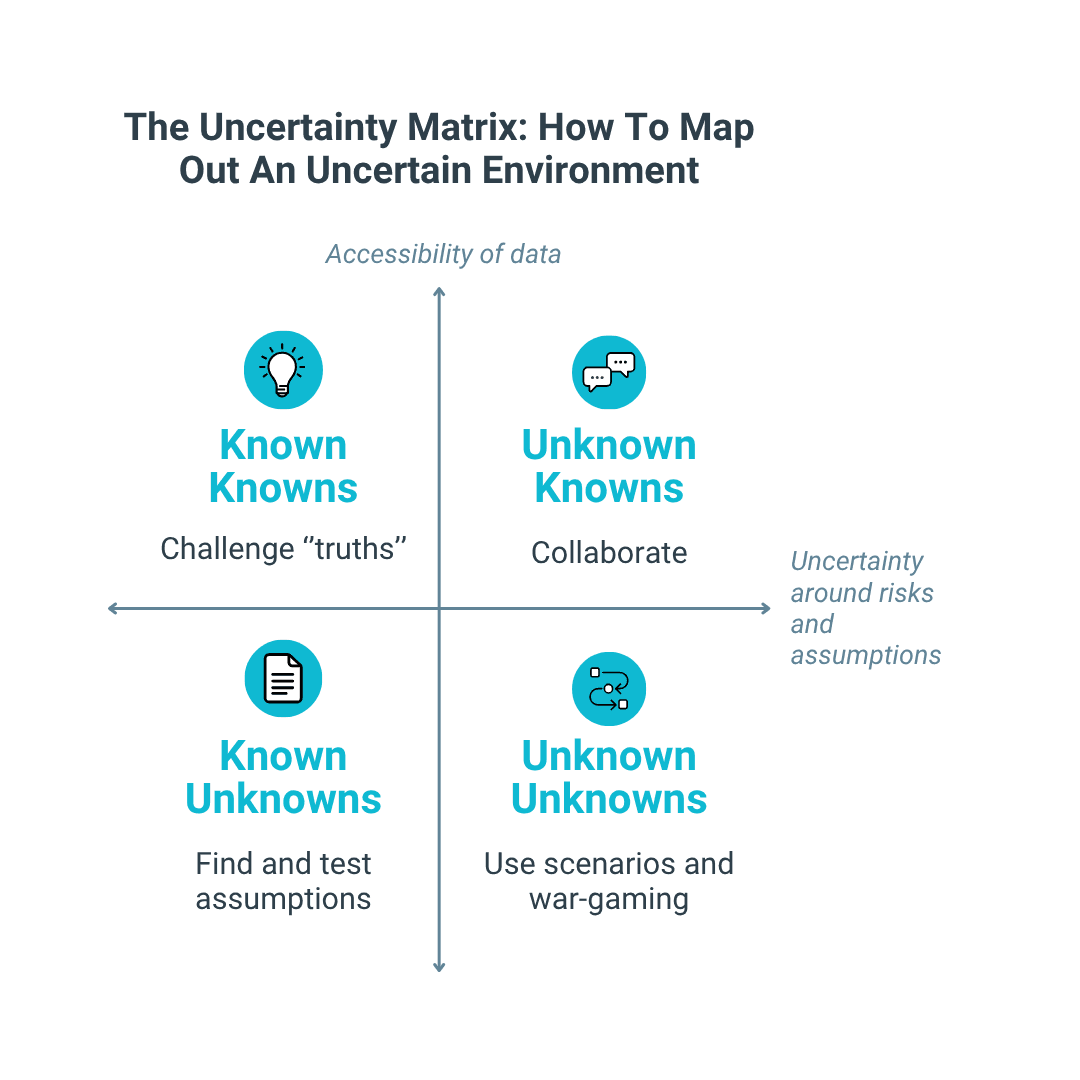
Regardless of the methods you choose, it is important to structure your data in an actionable way – in this case, by separating out the facts from the assumptions. At New Markets Advisors, we use the Uncertainty Matrix to organize this work. The matrix helps leadership teams map their current knowledge into four categories:
Known knowns are the things the organization believes it understands: current customers, competitors, capabilities, market dynamics, and strategic strengths. But even these “truths” should be pressure-tested. Some may be based more on legacy assumptions than current data.
Unknown knowns are insights that already exist somewhere in the organization but have not been surfaced. Front-line sales teams, customer support staff, suppliers, partners, and regional teams often see market signals before they reach senior leadership.
Known unknowns are the critical questions the organization knows it needs to investigate. These may include uncertainties around customer behavior, regulation, technology adoption, new business models, channel economics, or competitor moves.
Unknown unknowns are the potential forces that could reshape the market in unexpected ways. These are harder to identify directly, but they can be explored through scenario planning, analogous market analysis, and war-gaming.

Know Yourself 💡
Knowing your environment includes knowing your own organization. Make sure to pressure-test any assumptions your team may have about your value proposition, strengths, and weaknesses through both internal and external input.
Identify Future Market Trends Through Jobs to be Done Research


Amid changing circumstances, understanding your customers' needs enables you to evolve with them. This is where Jobs to be Done is an especially powerful tool. Instead of asking what customers are buying or which features they prefer, Jobs to be Done goes deeper by asking why customers make certain choices. That distinction matters because products, channels, and competitors may change, but the underlying "job" can unveil more durable sources of demand.
FutureCasting is strongest when it connects macro-level trends to customer-level motivation. We combine Jobs to be Done with customer journey mapping to identify where customers struggle today, where new expectations may emerge, and where competitors or substitutes could enter the journey with a better solution. For example, a channel shift may not simply mean customers are "moving online." It may mean they are trying to save time, reduce uncertainty, compare options more easily, avoid friction, or gain more control over the experience.
By mapping what is coming through both market signals and customer motivations, companies can better anticipate where demand is headed, where their current offering may fall short, and which future opportunities are worth exploring further.
Build Future Scenario Matrices to Explore Strategic Possibilities
After mapping the forces that could reshape the market, the next step is to decide which uncertainties matter most. FutureCasting focuses on the forces that are both highly uncertain and highly impactful because these are the shifts most likely to change what customers value, how competitors behave, and what strategic choices will matter.
These high-impact uncertainties become the axes of a future scenario matrix. Each quadrant represents a different possible future, shaped by how those uncertainties could combine. The goal is to understand the threats, opportunities, and strategic requirements that would emerge under different market conditions.
By charting alternative futures, companies can test which choices would perform well across several possible conditions. This helps leaders move from abstract uncertainty to practical strategic questions: What should we protect? What should we build? What capabilities would give us more flexibility? And which bets are worth making now because they create advantage in more than one future?
Move Away from the Best / Worst Case Scenario💡
A common approach is to build worst-, middle-, best- case scenarios. The intent is right: you consider all possible outcomes, including those that are less than ideal. However, this method assumes that there is only a single kind of best-, middle-, and worst-case scenario. In reality, different trends could collide to form a host of scenarios, many of which could be overwhelmingly positive or negative
Applying FutureCasting to Retail Banking

With the rise of fintechs and increasing importance of convenience, a retail bank could use FutureCasting to devise its channel strategy with the long-term goal of increasing customer loyalty.
Create a Strategic Innovation Portfolio for Multiple Futures
Once the alternative futures are clear, FutureCasting shifts from analysis to action. The goal is to decide what the organization should do now to become better prepared, more resilient, and more advantageously positioned across multiple possible futures.
Looking at the opportunities you surfaced in each scenario, decide how many bets to make, of what type, at what level, and with which timeframe. This is where having clear guidelines and expectations around investments from the get-go will be critical.
But having a shortlist of potential investments is not enough – you must organize them in a coherent, flexible portfolio plan. Over time, each opportunity will become more or less appealing, depending on the likelihood of their associated scenario. For this reason, make sure to identify and monitor key signals tied to each scenario. As these signals evolve, you can adjust the level of investment you make in a given opportunity accordingly.
Shape It Your Way💡
The goal is not only to prepare for the future, but also to shape it: as you experiment with new ideas, map out the steps you can take to precipitate that evolution (e.g., with customers, with other key decision-makers)
Monitor Market Signals and Adapt Your Strategy Over Time
The world doesn’t stop changing once you’re done with your FutureCasting work. As new trends appear and others wane, certain scenarios become more or less likely, and your strategy in turn will need adjusting.
To stay on top of trends, consider dedicating some resources to spotting and monitoring trends across various areas over time (e.g., regulation, technology, demographics). Consider institutionalizing this trend scanning capability, through venture capital partnerships, dedicated staff, intrapraneurship programs, crowdsourcing, or other tools. Get reports on findings regularly, with clear implications on which scenarios seem more likely. Then you can stress-test your current strategy against the new, updated scenarios, and adjust your bets accordingly.
FutureCasting cannot be a one-off effort. It must become an ongoing, systemic part of your strategy and operations. Keep this in mind as you start your first FutureCasting work and gain key stakeholders’ support. They will prove invaluable for the long-term success of your efforts.
How FutureCasting Improves Your Market Position
Companies can use FutureCasting to identify the future conditions under which their current value proposition may strengthen, weaken, or become irrelevant. This process reveals the scenarios where the core business should be defended, where existing offerings should adapt, and where new growth opportunities should be invested in before competitors do. It also helps leadership teams align on uncertainties without forcing premature consensus, connecting long-term scenarios to innovation priorities, portfolio strategy, and near-term actions. This directly addresses the common failure in strategic planning: developing long-term scenarios without connecting them to short-term action.
Resources
Working Paper
Navigating Uncertainty with FutureCasting
We developed FutureCasting to plot the future in a rigorous and actionable way by:
Help organizations translate long-term market shifts into near-term strategic actions
Drawing clear lines from macro issues to micro action implications
Not only preparing for the future, but also shaping it
SERVICE
Growth Strategy
We help companies identify and prioritize routes to profitable growth by:
Assisting hard choices about where to focus time and investment, indentifying risks to mitigate upfront
Combining Jobs to be Done segmentation, market sizing, and competitive positioning into a single, customer-centric framework
Looking for the rare but extremely profitable disruptive innovation opportunities for your product
Explore Service
Book
Capturing New Markets
Capturing New Markets: How Smart Companies Create Opportunities Others Don’t is a new markets strategy book by Stephen Wunker
It reveals how organizations can systematically identify unmet needs, shape demand, and dominate new industries before competitors arrive.
The book provides actionable frameworks—from white space mapping to opportunity portfolios—that turn insight into growth
Download Book's Intro
Read our latest book on Ai strategy
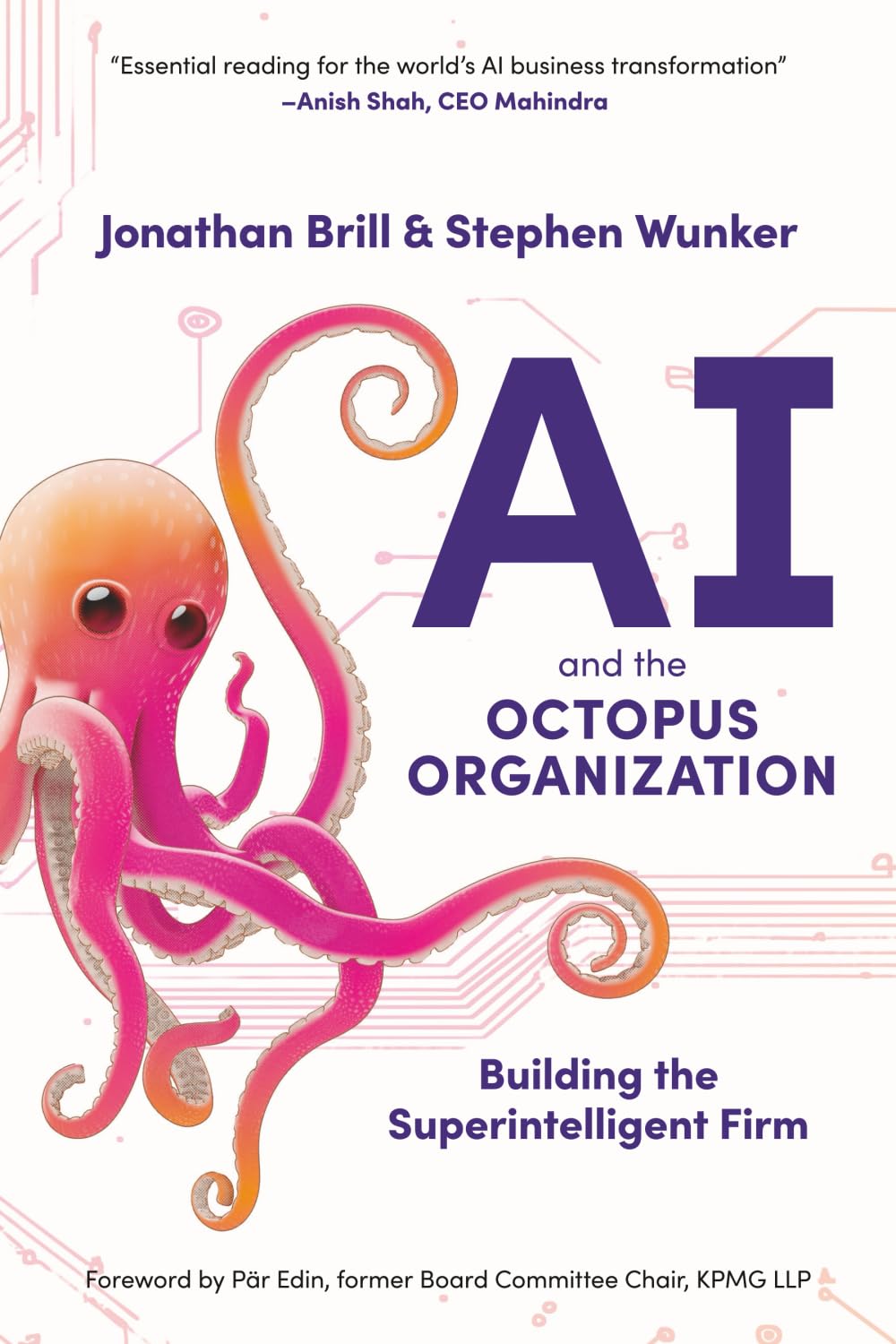
AI and The Octopus Organization: Building the Superintelligent Firm
Here’s how this framework helps leaders move from experimenting with AI to truly transforming their business:
Revealing ten types of AI innovation, from reimagining value chains to creating entirely new revenue models, that expand what’s possible.
Guiding companies to align AI strategy with real customer needs, not just technical capabilities.
Working Paper
Navigating Uncertainty with FutureCasting
We developed FutureCasting to plot the future in a rigorous and actionable way by:
Help organizations translate long-term market shifts into near-term strategic actions
Drawing clear lines from macro issues to micro action implications
Not only preparing for the future, but also shaping it
SERVICE
Growth Strategy
We help companies identify and prioritize routes to profitable growth by:
Assisting hard choices about where to focus time and investment, indentifying risks to mitigate upfront
Combining Jobs to be Done segmentation, market sizing, and competitive positioning into a single, customer-centric framework
Looking for the rare but extremely profitable disruptive innovation opportunities for your product
Explore Service
Book
Capturing New Markets
Capturing New Markets: How Smart Companies Create Opportunities Others Don’t is a new markets strategy book by Stephen Wunker
It reveals how organizations can systematically identify unmet needs, shape demand, and dominate new industries before competitors arrive.
The book provides actionable frameworks—from white space mapping to opportunity portfolios—that turn insight into growth
Download Book's Intro
Read our latest book on Ai strategy
AI and The Octopus Organization: Building the Superintelligent Firm
Here’s how this framework helps leaders move from experimenting with AI to truly transforming their business:
Revealing ten types of AI innovation, from reimagining value chains to creating entirely new revenue models, that expand what’s possible.
Guiding companies to align AI strategy with real customer needs, not just technical capabilities.
Working Paper
Navigating Uncertainty with FutureCasting
We developed FutureCasting to plot the future in a rigorous and actionable way by:
Help organizations translate long-term market shifts into near-term strategic actions
Drawing clear lines from macro issues to micro action implications
Not only preparing for the future, but also shaping it
SERVICE
Growth Strategy
We help companies identify and prioritize routes to profitable growth by:
Assisting hard choices about where to focus time and investment, indentifying risks to mitigate upfront
Combining Jobs to be Done segmentation, market sizing, and competitive positioning into a single, customer-centric framework
Looking for the rare but extremely profitable disruptive innovation opportunities for your product
Explore Service
Book
Capturing New Markets
Capturing New Markets: How Smart Companies Create Opportunities Others Don’t is a new markets strategy book by Stephen Wunker
It reveals how organizations can systematically identify unmet needs, shape demand, and dominate new industries before competitors arrive.
The book provides actionable frameworks—from white space mapping to opportunity portfolios—that turn insight into growth
Download Book's Intro
Read our latest book on Ai strategy
AI and The Octopus Organization: Building the Superintelligent Firm
Here’s how this framework helps leaders move from experimenting with AI to truly transforming their business:
Revealing ten types of AI innovation, from reimagining value chains to creating entirely new revenue models, that expand what’s possible.
Guiding companies to align AI strategy with real customer needs, not just technical capabilities.
Working Paper
Navigating Uncertainty with FutureCasting
We developed FutureCasting to plot the future in a rigorous and actionable way by:
Help organizations translate long-term market shifts into near-term strategic actions
Drawing clear lines from macro issues to micro action implications
Not only preparing for the future, but also shaping it
SERVICE
Growth Strategy
We help companies identify and prioritize routes to profitable growth by:
Assisting hard choices about where to focus time and investment, indentifying risks to mitigate upfront
Combining Jobs to be Done segmentation, market sizing, and competitive positioning into a single, customer-centric framework
Looking for the rare but extremely profitable disruptive innovation opportunities for your product
Explore Service
Book
Capturing New Markets
Capturing New Markets: How Smart Companies Create Opportunities Others Don’t is a new markets strategy book by Stephen Wunker
It reveals how organizations can systematically identify unmet needs, shape demand, and dominate new industries before competitors arrive.
The book provides actionable frameworks—from white space mapping to opportunity portfolios—that turn insight into growth
Download Book's Intro
Read our latest book on Ai strategy
AI and The Octopus Organization: Building the Superintelligent Firm
Here’s how this framework helps leaders move from experimenting with AI to truly transforming their business:
Revealing ten types of AI innovation, from reimagining value chains to creating entirely new revenue models, that expand what’s possible.
Guiding companies to align AI strategy with real customer needs, not just technical capabilities.
working paper
Navigating Uncertainty with FutureCasting
We developed FutureCasting to plot the future in a rigorous and actionable way by:
Help organizations translate long-term market shifts into near-term strategic actions
Drawing clear lines from macro issues to micro action implications
Not only preparing for the future, but also shaping it
service
Growth Strategy
We help companies identify and prioritize routes to profitable growth by:
Assisting hard choices about where to focus time and investment, indentifying risks to mitigate upfront
Combining Jobs to be Done segmentation, market sizing, and competitive positioning into a single, customer-centric framework
Looking for the rare but extremely profitable disruptive innovation opportunities for your product
Explore Service
book
Capturing New Markets
Capturing New Markets: How Smart Companies Create Opportunities Others Don’t is a new markets strategy book by Stephen Wunker
The book provides actionable frameworks—from white space mapping to opportunity portfolios—that turn insight into growth
It reveals how organizations can systematically identify unmet needs, shape demand, and dominate new industries before competitors arrive.
Download Book's Intro
working paper
Navigating Uncertainty with FutureCasting
We developed FutureCasting to plot the future in a rigorous and actionable way by:
Help organizations translate long-term market shifts into near-term strategic actions
Drawing clear lines from macro issues to micro action implications
Not only preparing for the future, but also shaping it
service
Growth Strategy
We help companies identify and prioritize routes to profitable growth by:
Assisting hard choices about where to focus time and investment, indentifying risks to mitigate upfront
Combining Jobs to be Done segmentation, market sizing, and competitive positioning into a single, customer-centric framework
Looking for the rare but extremely profitable disruptive innovation opportunities for your product
Explore Service
book
Capturing New Markets
Capturing New Markets: How Smart Companies Create Opportunities Others Don’t is a new markets strategy book by Stephen Wunker
The book provides actionable frameworks—from white space mapping to opportunity portfolios—that turn insight into growth
It reveals how organizations can systematically identify unmet needs, shape demand, and dominate new industries before competitors arrive.
Download Book's Intro
working paper
Navigating Uncertainty with FutureCasting
We developed FutureCasting to plot the future in a rigorous and actionable way by:
Help organizations translate long-term market shifts into near-term strategic actions
Drawing clear lines from macro issues to micro action implications
Not only preparing for the future, but also shaping it
service
Growth Strategy
We help companies identify and prioritize routes to profitable growth by:
Assisting hard choices about where to focus time and investment, indentifying risks to mitigate upfront
Combining Jobs to be Done segmentation, market sizing, and competitive positioning into a single, customer-centric framework
Looking for the rare but extremely profitable disruptive innovation opportunities for your product
Explore Service
book
Capturing New Markets
Capturing New Markets: How Smart Companies Create Opportunities Others Don’t is a new markets strategy book by Stephen Wunker
The book provides actionable frameworks—from white space mapping to opportunity portfolios—that turn insight into growth
It reveals how organizations can systematically identify unmet needs, shape demand, and dominate new industries before competitors arrive.
Download Book's Intro
working paper
Navigating Uncertainty with FutureCasting
We developed FutureCasting to plot the future in a rigorous and actionable way by:
Help organizations translate long-term market shifts into near-term strategic actions
Drawing clear lines from macro issues to micro action implications
Not only preparing for the future, but also shaping it
service
Growth Strategy
We help companies identify and prioritize routes to profitable growth by:
Assisting hard choices about where to focus time and investment, indentifying risks to mitigate upfront
Combining Jobs to be Done segmentation, market sizing, and competitive positioning into a single, customer-centric framework
Looking for the rare but extremely profitable disruptive innovation opportunities for your product
Explore Service
book
Capturing New Markets
Capturing New Markets: How Smart Companies Create Opportunities Others Don’t is a new markets strategy book by Stephen Wunker
The book provides actionable frameworks—from white space mapping to opportunity portfolios—that turn insight into growth
It reveals how organizations can systematically identify unmet needs, shape demand, and dominate new industries before competitors arrive.
Download Book's Intro
FutureCasting in Action: Case Study in Healthcare
A large U.S. healthcare provider to employers wanted to understand what revenue expansion opportunities existed beyond their offering and devise a portfolio strategy based on their long-term potential
The right consulting model depends on the nature of the challenge.
The comparison below outlines when organizations typically benefit most from a boutique consulting firm versus a large consulting firm.
Plot Known & Unknown
Through market trends analysis and internal briefings, our team surfaced a variety of potential revenue expansion opportunities to explore further, including around tailored telehealth applications and occasion-specific clinician engagement, with key assumptions and uncertainties tied to each.
The right consulting model depends on the nature of the challenge.
The comparison below outlines when organizations typically benefit most from a boutique consulting firm versus a large consulting firm.
Map What's Coming
We then conducted 30 in-depth interviews with current target customers to evaluate the relative appeal of each idea and surface additional opportunities.
The right consulting model depends on the nature of the challenge.
The comparison below outlines when organizations typically benefit most from a boutique consulting firm versus a large consulting firm.
Create Alternative Futures
Using the data we had gathered during Phases 1 and 2, we prioritized a shortlist of opportunities to focus on and selected the most uncertain trends with the greatest impact on their success. From there, we built out a two-dimensional matrix displaying each scenario to prepare for (see matrix below).
The right consulting model depends on the nature of the challenge.
The comparison below outlines when organizations typically benefit most from a boutique consulting firm versus a large consulting firm.

Create Options
Having mapped out the steps needed to address each scenario, we built out a balanced portfolio strategy that accounted for opportunity size, appeal to employers, operational synergies, company advantages, risk, and other factors. Critically, we laid out a set of signals to watch out for over time, so that our client could pivot based on which outcome seemed more likely.
The right consulting model depends on the nature of the challenge.
The comparison below outlines when organizations typically benefit most from a boutique consulting firm versus a large consulting firm.
Review, Adapt, Repeat
Going forward, our client was able to review these plans periodically on its own and shift its priorities as customer needs and payment schemes changed in the marketplace.
The right consulting model depends on the nature of the challenge.
The comparison below outlines when organizations typically benefit most from a boutique consulting firm versus a large consulting firm.
Working paper
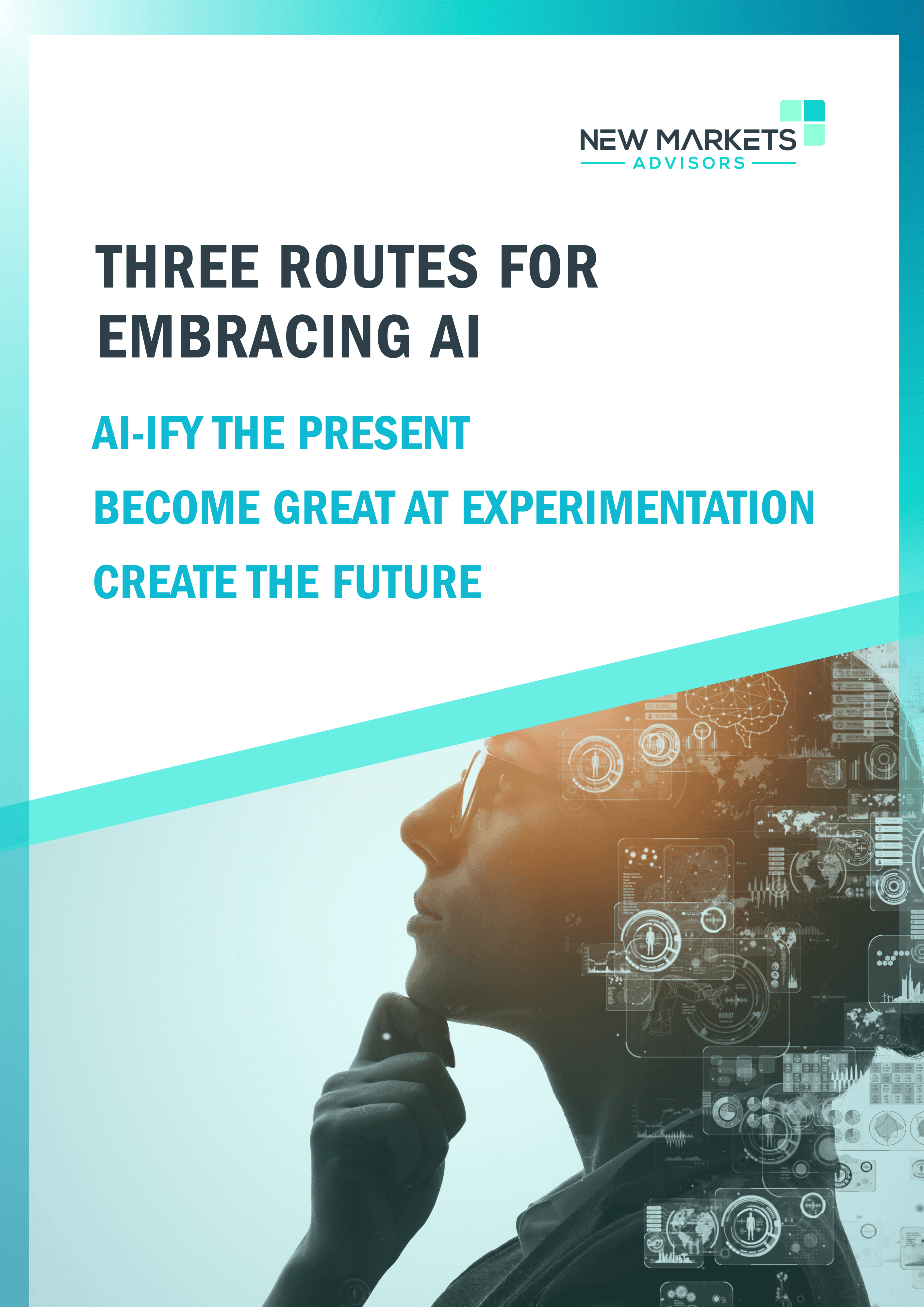
Three Routes for Embracing AI
The Three Routes framework helps organizations lead in the AI Age by:
Applying AI to existing operations to drive measurable productivity gains while staying centered on customer Jobs and system design
Building experimentation muscle—using structured hypotheses, rapid testing, and strong governance to learn fast and scale what works
Creating the future through strategic foresight, scenario planning, and portfolio thinking that turn uncertainty into long-term growth
Download PDF
Beyond the Chatbot
working paper
Here’s how this framework helps leaders move from experimenting with AI to truly transforming their business:
Revealing ten types of AI innovation, from reimagining value chains to creating entirely new revenue models, that expand what’s possible.
Guiding companies to align AI strategy with real customer needs, not just technical capabilities.
Offering a disciplined, customer-centered process to prioritize opportunities, test rapidly, and scale with confidence.
FutureCasting vs. Other Scenario Planning Tools
FutureCasting brings several tools together into a more actionable process. Trend scanning, scenario planning, wargaming, Jobs to be Done research, and innovation portfolio management each have value, but they can fall short when used in isolation. A scenario-planning exercise may describe possible futures without changing investment decisions. A competitive wargame may focus too narrowly on rivals while missing customer behavior, business model shifts, or channel disruption.
FutureCasting strengthens these tools by connecting external change to customer motivations, strategic implications, and a portfolio of concrete options. The result is not just a set of possible futures, but a clearer view of which bets to make, which signals to monitor, and how to adapt as the market evolves. This is especially important because the FutureCasting process is designed to link long-term scenarios to short-term action, helping companies move from foresight to strategy.
Today, competitive advantage is increasingly shaped by how well organizations frame their most important problems.
Markets are shifting faster. AI is reshaping industries. Customer expectations evolve rapidly. In this environment, breakthrough advantage rarely comes from scale alone — it comes from sharper insight.
The companies that outperform are often those that:
Frame the right strategic question
Identify overlooked growth opportunities
Connect weak signals into coherent direction
Move decisively before competitors
These capabilities depend on experienced strategists who can navigate ambiguity and synthesize complexity — not just deploy large teams.
As strategy becomes more conceptual and less procedural, the structural advantages of boutique consulting firms become more relevant.
For executive teams making high-impact decisions about growth, innovation, and transformation, depth of thinking can matter more than organizational scale.
| Tool | Best For | Limitation | How FutureCasting Uses or Improves It |
|---|---|---|---|
| Trend scanning | Identifying external changes | Can become a list with no action | Connects trends to strategic implications |
| Scenario planning | Exploring possible futures | Often too abstract or slow | Links scenarios to decisions and investments |
| Wargaming | Understanding competitive moves | Can focus too narrowly on competitors | Adds customer, market, and business model context |
| Jobs to be Done research | Understanding customer motivations | Does not by itself create future scenarios | Grounds future strategy in evolving customer needs |
| Innovation portfolio management | Managing strategic bets | Needs strong inputs and signals | Uses scenarios to shape and rebalance bets |
Key Takeaway💡
FutureCasting is strongest when it connects foresight tools to action. It helps companies move from “what might happen?” to “what should we do, what should we monitor, and how should our portfolio evolve?”
Common FutureCasting Mistakes
FutureCasting is most valuable when it turns uncertainty into strategic action. However, companies can weaken the process when they treat it as a prediction exercise or disconnect it from real decisions.
One common mistake is trying to produce a single forecast of the future. FutureCasting should explore multiple plausible futures so the organization can prepare for uncertainty, not pretend it can eliminate it.
Another mistake is relying only on best-, middle-, and worst-case scenarios. This can oversimplify uncertainty and miss how different market forces may combine in unexpected ways. A more useful approach is to identify the uncertainties that are both highly impactful and highly unpredictable, then build scenarios around how those forces could interact.
Companies also fall short when they ignore customer motivations. Future scenarios should not be based only on macro trends like regulation, technology, or economic conditions. They should also reflect how customer needs, behaviors, and Jobs to be Done may evolve.
The biggest mistake is failing to connect scenarios to action. FutureCasting should not end as a presentation that sits on a shelf. It should shape investment decisions, innovation priorities, market positioning, and strategic options.
FutureCasting cannot be a one-time workshop led by a narrow group of executives. Markets continue changing, so companies need signal tracking, regular review cycles, and diverse perspectives from front-line employees, sales teams, customer support, operators, newer employees, and contrarians who may see market signals senior leaders miss.
As a boutique strategy consulting firm, New Markets Advisors is built around senior-led engagement, distinctive frameworks, and focused expertise.
Our specialization centers on:



our Industries
Trusted by Global Leaders for Proven Growth Strategies
Our growth strategy clients range from international leaders to promising startups across our four key industries:

Frequently Asked Questions
What is FutureCasting?
FutureCasting is a strategic foresight methodology that helps companies explore possible futures, understand uncertainty, and make better decisions today. It combines research, trend analysis, scenario planning, customer insight, and portfolio strategy to help organizations adapt as markets change. New Markets Advisors has worked with global organizations across North America, Europe, and other international markets, advising senior leadership teams on high-impact strategic decisions.
How can I use FutureCasting to improve my company’s market positioning?
How is FutureCasting different from scenario planning?
What types of companies benefit from FutureCasting?
Who should be involved in a FutureCasting project?
What are the benefits of hiring a FutureCasting consultant?
How do I choose the right FutureCasting agency for corporate innovation projects?
What is FutureCasting?
FutureCasting is a strategic foresight methodology that helps companies explore possible futures, understand uncertainty, and make better decisions today. It combines research, trend analysis, scenario planning, customer insight, and portfolio strategy to help organizations adapt as markets change. New Markets Advisors has worked with global organizations across North America, Europe, and other international markets, advising senior leadership teams on high-impact strategic decisions.
How can I use FutureCasting to improve my company’s market positioning?
How is FutureCasting different from scenario planning?
Costovation - Discover How To Build Low-Cost Business That Customer Love
Who should be involved in a FutureCasting project?
What are the benefits of hiring a FutureCasting consultant?
How do I choose the right FutureCasting agency for corporate innovation projects?


AI Strategy
Helping a tech giant revamp its AI strategy and area of focus
AI Strategy
Helping a tech giant revamp its AI strategy and area of focus

AI Strategy
How a leading tech company crafted its strategy to lead in emerging businesses
AI Strategy
How a leading tech company crafted its strategy to lead in emerging businesses







Connect With Us
Let's Talk
Fill out the form below to start the conversation about working with New Markets Advisors

Connect With Us
Let's Embrace AI Together
Fill out the form below to start the conversation about working with New Markets Advisors

Executive Takeaway 💡
FutureCasting is a strategic foresight methodology that helps organizations explore alternative futures, map uncertainty, and translate long-term market shifts into near-term strategic actions. It helps leadership teams improve market positioning by identifying emerging customer needs, competitive threats, innovation opportunities, and signals that indicate when to adapt strategy. (too ai)
Our FutureCasting Method: A Five-Step Process
We at New Markets Advisors developed FutureCasting, a process for plotting the future that combines action and rigor. This process is divided into five steps: 1) Plot Known and Unknown, 2) Map What's Coming, 3) Chart Alternative Futures, 4) Create Options, and 5) Review, Adapt and Repeat.
Plot Known & Unkowns
The first step in FutureCasting is to understand the environment you are operating in today before trying to imagine what comes next. That means separating what your organization truly knows from what it assumes, what it still needs to learn, and what may be invisible from its current vantage point. Without this step, companies risk building future strategies on outdated beliefs, internal anecdotes, or historical patterns that may no longer hold.
At New Markets Advisors, we use an Uncertainty Matrix to organize this work. The matrix helps leadership teams map their current knowledge into four categories:
Known knowns are the things the organization believes it understands: current customers, competitors, capabilities, market dynamics, and strategic strengths. But even these “truths” should be pressure-tested. Some may be based more on legacy assumptions than current data.
Unknown knowns are insights that already exist somewhere in the organization but have not been surfaced. Front-line sales teams, customer support staff, suppliers, partners, and regional teams often see market signals before they reach senior leadership.
Known unknowns are the critical questions the organization knows it needs to investigate. These may include uncertainties around customer behavior, regulation, technology adoption, new business models, channel economics, or competitor moves.
Unknown unknowns are the potential forces that could reshape the market in unexpected ways. These are harder to identify directly, but they can be explored through scenario planning, analogous market analysis, and war-gaming.
Know Yourself 💡
Knowing your environment includes knowing your own organization. Make sure to pressure-test any assumptions your team may have about your value proposition, strengths and weaknesses through both internal and external input.
Map What's Coming
To make your business resilient over time, you need to factor in possible changes in your environment. They will vary in nature, ranging from regulations and technology to economic and social trends – all of which will have a more or less significant impact on your customers and competition.
These changes don’t all happen at the same pace, or with the same degree of intensity. Some are a slow burn, others will move fairly quickly and visibly, and a few key ones might progress steadily until a sudden shift takes place. Breaking them apart will be key to understanding how you should prepare for these shifts yourself.
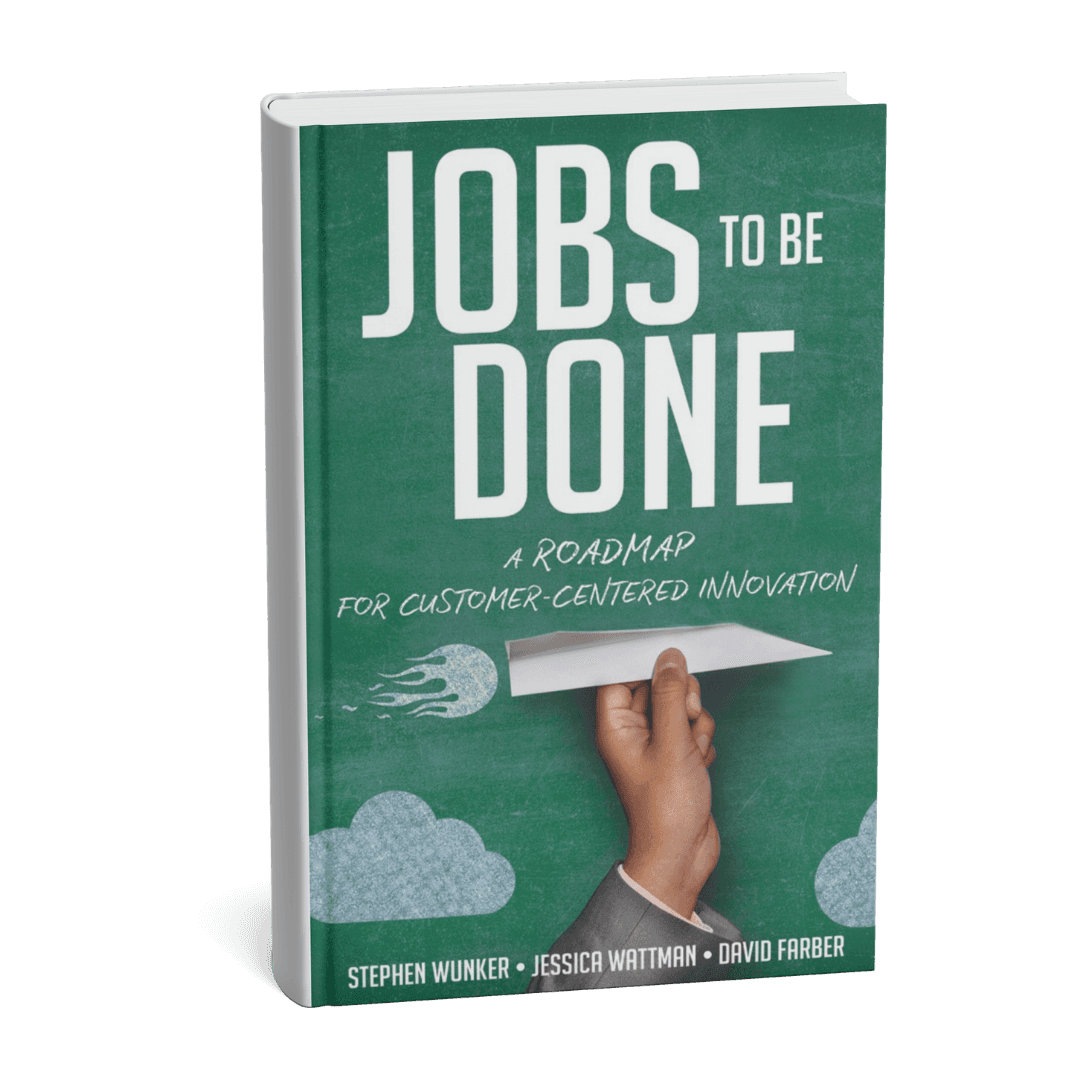
This is where Jobs to be Done becomes especially powerful. Unlike other frameworks, Jobs to be Done shifts the focus of customer research from past behaviors to discovering your audience’s real, underlying motivations. Jobs to be Done doesn’t just ask what your customers are buying, but why – allowing you to remain close to your audience as their context evolves as well.
The goal is to connect macro-level change to customer-level motivation. Emerging technologies, new regulations, demographic shifts, and economic pressures only become strategically meaningful when they are translated into implications for customer behavior, competitive advantage, and business model design. As the FutureCasting working paper notes, companies need to understand customer needs as circumstances change, and Jobs to be Done helps shift research from past behaviors to the underlying motivations behind customer choices
Chart Alternative Futures
After mapping the forces that could reshape the market, the next step is to decide which uncertainties matter most. Not every trend deserves equal attention. Some are relatively predictable. Others may be interesting but not strategically decisive. FutureCasting focuses on the forces that are both highly uncertain and highly impactful because these are the shifts most likely to change what customers value, how competitors behave, and what strategic choices will matter.
These high-impact uncertainties become the axes of a future scenario matrix. Each quadrant represents a different possible future, shaped by how those uncertainties could combine. The goal is to understand the threats, opportunities, and strategic requirements that would emerge under different market conditions.
By charting alternative futures, companies can test which choices would perform well across several possible conditions. This helps leaders move from abstract uncertainty to practical strategic questions: What should we protect? What should we build? What capabilities would give us more flexibility? And which bets are worth making now because they create advantage in more than one future?
Move Away from the Best / Worst Case Scenario💡
A common approach is to build worst-, middle-, best- case scenarios. The intent behind is right: you consider all possible outcomes, including those that are less than ideal. However, this method assumes that there is only a single kind of best-, middle-, and worst-case scenario when in reality, different trends could collide to form a host of scenarios, many of which could be overwhelminghly positive or negative
Create Options
Looking at the opportunities you surfaced in each scenario, decide how many bets to make, of what type, at what level, and with which timeframe. This is where having clear guidelines and expectations around investments from the get-go will be critical.
But having a shortlist of potential investments is not enough – you must organize them in a coherent, flexible portfolio plan. Over time, each opportunity will become more or less appealing, depending on the likelihood of their associated scenario. For this reason, make sure to identify and monitor key signals tied to each scenario. As these signals evolve, you can adjust the level of investment you make in a given opportunity accordingly.
Shape It Your Way💡
The goal is not only to prepare for the future, but also to shape it: as you experiment with new ideas, map out the steps you can take to arecipitate that evolution (e.g., with customers, with other key decision-makers)
Review, Adapt, Repeat
The world doesn’t stop changing once you’re done with your FutureCasting work. As new trends appear and others wane, certain scenarios become more or less likely, and your strategy in turn will need adjusting.
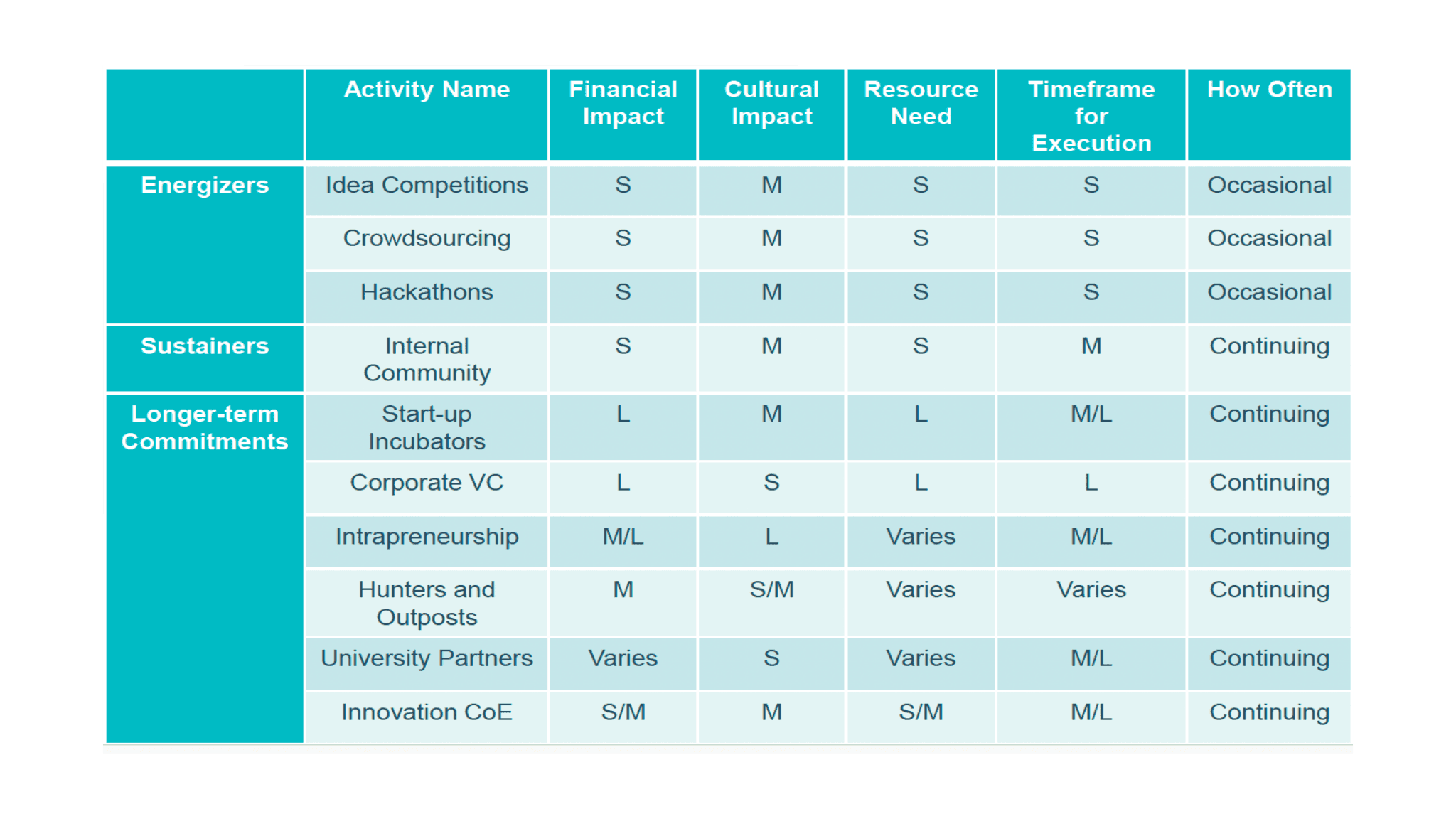
To stay on top of trends, consider dedicating some resources to spotting and monitoring trends across various areas over time (e.g., regulation, technology, demographics). Consider institutionalizing this trend scanning capability, through venture capital partnerships, dedicated staff, intrapraneurship programs, crowdsourcing, or other tools. Get reports on findings regularly, with clear implications on which scenarios seem more likely. Then you can stress-test your current strategy against the new, updated scenarios, and adjust your bets accordingly.
FutureCasting cannot be a one-off effort. It must become an ongoing, systemic part of your strategy and operations. Keep this in mind as you start your first FutureCasting work and gain key stakeholders’ support. They will prove invaluable for the long-term success of your efforts.
Sample of Potential Approaches

Our Offices
50 Franklin St
2nd Floor
Boston, MA 02110
USA
151 San Francisco St
Suite 200
San Juan, PR 00901 Puerto Rico
Rua Antónia Andrade 4
3 Direito
1170-025 Lisboa
Portugal

Our Offices
50 Franklin St
2nd Floor
Boston, MA 02110
USA
151 San Francisco St
Suite 200
San Juan, PR 00901 Puerto Rico
Rua Antónia Andrade 4
3 Direito
1170-025 Lisboa
Portugal
Our Offices
50 Franklin St
2nd Floor
Boston, MA 02110
USA
151 San Francisco St
Suite 200
San Juan, PR 00901 Puerto Rico
Rua Antónia Andrade 4
3 Direito
1170-025 Lisboa
Portugal
Our Offices
50 Franklin St
2nd Floor
Boston, MA 02110 USA
151 San Francisco St
Suite 200
San Juan, PR 00901 Puerto Rico
Rua Antónia Andrade 4
3 Direito
1170-025 Lisboa
Portugal
Get In Touch
+1 617 936 4035
info@newmarketsadvisors.com