Product Management In the Age of AI | Three Lessons


AI is revolutionizing product management by making building cheap. Three shifts follow. Judgment has become the bottleneck, because teams now generate usable options faster than anyone can choose among them. Given all those options, the roadmap has to become a learning system, tracking evidence and confidence rather than features and dates. And the role is splitting into a barbell, with broad integrators at one end and deep domain stewards at the other. The organizations that understand their customers best will be the winners from these changes.
Three Lessons

AI Has Made Judgment The New Product Management Bottleneck

Your Product Roadmap Should Become A Learning System

Product Management Is Becoming A Barbell Profession
Why has AI moved the product bottleneck from engineering to judgment?
AI moved the bottleneck because capacity used to do the prioritizing, and capacity is no longer scarce. However long the wish list grew, only a sliver of it ever got built. That was a crude form of discipline, but it was discipline.
The convenient story is that this is pure productivity gain. It isn't. Good ideas accelerate alongside bad ones at the same rate, and the bad ones now arrive with a working prototype attached.
One recent survey of nearly 250 product professionals found AI use clustered around summarizing customer feedback and generating research outputs. Far fewer teams used it for the upstream work of choosing which customer problems to fund. AI has become excellent at processing signals, but deciding which signals deserve money and engineers is still a human call.
A torrent of feedback still won't tell you what to build
Customer requests arrive from inside the customer's current experience, which is a narrow place to stand. Someone asks for a dashboard. Read literally, that is a feature request. The Jobs to be Done underneath it might relate to catching costly exceptions before they compound, or reassuring an anxious executive, or reclaiming the hours a weekly report swallows. Each of those prioritizes a different product. Shipping the dashboard quickly solves none of them if the team has misread the customer.
Three disciplines clear the decision queue.
1. Make every consequential proposal name the customer Jobs to be Done that it serves. A stack of feature requests is evidence to investigate, not a strategy.
2. Decide what evidence the next commitment requires. A rough prototype may earn customer testing, but it rarely earns a major architectural bet. Separate reversible experiments from choices that carry regulatory, data, brand, or platform consequences.
3. Set decision rights and exit conditions before the work starts, so one person owns the call and everyone knows which finding kills the idea.
None of this slows a team down. It concentrates argument where it matters and leaves a record of the reasoning, so teams can learn instead of re-litigate.
Customer requests arrive from inside the customer's current experience, which is a narrow place to stand. Someone asks for a dashboard. Read literally, that is a feature request. The Jobs to be Done underneath it might relate to catching costly exceptions before they compound, or reassuring an anxious executive, or reclaiming the hours a weekly report swallows. Each of those prioritizes a different product. Shipping the dashboard quickly solves none of them if the team has misread the customer.
Three disciplines clear the decision queue.
1. Make every consequential proposal name the customer Jobs to be Done that it serves. A stack of feature requests is evidence to investigate, not a strategy.
2. Decide what evidence the next commitment requires. A rough prototype may earn customer testing, but it rarely earns a major architectural bet. Separate reversible experiments from choices that carry regulatory, data, brand, or platform consequences.
3. Set decision rights and exit conditions before the work starts, so one person owns the call and everyone knows which finding kills the idea.
None of this slows a team down. It concentrates argument where it matters and leaves a record of the reasoning, so teams can learn instead of re-litigate.

What should a product roadmap manage when building is easy?
A product roadmap should manage learning, not just delivery. Most still organize features, teams, and dates around a unit of output, e.g. build this capability by this quarter. That made sense when an early design took weeks and a release took months, and when scarce capacity forced a company into a few bets it could then plan around.
What a learning roadmap records
Five things, for every significant initiative:
The targeted Jobs to be Done, and the assumption about why that group of Jobs matters
The evidence gathered so far
The next cheap experiment that could change the team's confidence
The stopping rule
The evidence required to justify greater investment
Dates retain an important role. They mark evidence reviews, investment decisions, and market deadlines. What they should stop doing is lending false precision to a solution chosen before the learning happened.
Measure how fast you can find out you were wrong
A roadmap built this way changes what progress means. Shipping still counts, but it becomes one stage in a longer process. The sharper question is how quickly a team can expose and settle its riskiest assumptions.
A clickable prototype can show whether customers understand an experience. It says nothing about reliability, willingness to pay, unit economics, security, or regulatory feasibility. Because AI makes artifacts look convincing earlier, rapid experimentation can quietly degrade into rapid storytelling, with a polished mockup lending a weak idea the appearance of maturity.
Which is why stopping deserves a more respectable place in product governance. Ending an unpromising initiative protects capital, customer attention, and maintenance capacity.
2.7 weeks faster project call outs
A Strategic Management Journal study assessed four randomized trials involving 759 firms and found that entrepreneurs taught to frame decisions scientifically were likelier to terminate weak projects, did so about 2.7 weeks earlier, and made more focused pivots rather than changing direction repeatedly. Which suggests a performance question worth asking: how long does it take us to disprove an important assumption?
Why is the product manager role splitting into a barbell?
The role is splitting because AI made breadth cheap and judgment expensive at the same time. Those two pull in opposite directions, and most organizations are trying to resolve them inside a single person.
A PM now moves across design, engineering, analytics, and go-to-market with far fewer handoffs than the role once demanded. More than being product management, the role is now more appropriately conceived as product developer.
Yet there is also an opposite construct: agents absorb the execution, while people divide into domain specialists who oversee agents in their own area and orchestrators who connect the outputs across functions.
Both these views actually describe the same shape, from opposite ends.


The two ends of the barbell
A product integrator is a product manager who moves from a customer problem to a prototype, a data query, or a launch experiment without waiting on handoffs, holding the product coherent as work crosses disciplines. One PM we interviewed at JPMorganChase, for instance, noticed that fast-moving teams were designing first and documenting later, losing their requirements as they iterated directly in Figma. So she built a tool that reads the design files and generates the documentation from them — tooling a product manager would once have requested from engineering and quite possibly never received.
A domain steward is a product manager with deep expertise in a market, technology, or risk environment, who knows where the edge cases live and when a polished answer is dangerously incomplete.
Organizations will need both. The mistake is assuming they need both in the same person.
Product Integrator
Domain Steward
Core Value
Moves from a customer problem to a prototype, a data query, or a launch experiment with few handoffs
Knows where the edge cases live and when a polished answer is dangerously incomplete
Scarce skill
Framing a customer's Jobs to be Done and seeing how a decision in one discipline lands in another
Deep expertise in a market, technology, or risk environment
Fits best
Consumer applications and reversible decisions
Regulated platforms and high-stakes workflows
Failure mode
Confidently wrong, at speed
Becoming a review queue that recreates the handoffs AI just removed
Advances by
Framing ambiguous problems, synthesizing across functions, holding the product coherent
Developing rare judgment, setting standards, resolving the difficult calls
Don't write the superhuman job description
The easy organizational response is to lengthen the job description: one person to prototype, inspect code, analyze data, run customer research, shape the launch, and coordinate every stakeholder. That confuses technological reach with human capacity.
The danger has been quantified. In a Harvard Business School field experiment involving 758 consultants, participants using AI finished suitable tasks over 25% faster and produced work rated over 40% higher in quality. On a task outside AI's effective frontier, they were 19% less likely to reach the correct answer. A generalist can now acquire remarkable reach and become confidently wrong, at speed, with a prototype that looks finished while ignoring accessibility, architecture, privacy, or regulation.
Product professionals see it coming. In a 2026 survey, 73% expected product management roles to become more hybrid, while 47% named unrealistic expectations for product managers as a concern.
Three choices help.
Set the mix by product context. A consumer application built on reversible decisions can lean toward integrators. A regulated platform or a high-stakes workflow needs stronger stewardship. Every product area needs both ends, but the proportions vary.
Define decision rights. Integrators should know what they may investigate, test, and ship on their own, with steward review at explicit thresholds tied to risk and consequence. Requiring specialist approval for every small experiment recreates the handoffs AI just eliminated. On the flipside, letting every experiment become a release invites fast, expensive mistakes.
Define decision rights. Integrators should know what they may investigate, test, and ship on their own, with steward review at explicit thresholds tied to risk and consequence. Requiring specialist approval for every small experiment recreates the handoffs AI just eliminated. On the flipside, letting every experiment become a release invites fast, expensive mistakes.
Move Away from the Best / Worst Case Scenario💡
A common approach is to build worst-, middle-, best- case scenarios. The intent is right: you consider all possible outcomes, including those that are less than ideal. However, this method assumes that there is only a single kind of best-, middle-, and worst-case scenario. In reality, different trends could collide to form a host of scenarios, many of which could be overwhelmingly positive or negative
Some exceptional product managers will represent both ends of the barbell. But designing the profession around them will can produce exhaustion and superficiality.
What should product leaders do now?
The three shifts are one AI Age revolution seen from three angles. When execution stops being the bottleneck, the constraint becomes the quality of your decisions, the impact of your learning, and the design of the people doing both.
That has an organizational consequence. Teams now devise AI-enabled workflows faster than any central group can approve them, so the workable division of labor is for leadership to set the limits — approved tools, data rules, quality standards, investment priorities — and for product teams to run the experiments inside them.
Rivals can copy a feature they can see. They have a much harder time copying a better grasp of why customers choose, struggle, switch, or simply go without.
Winning product organizations won’t necessarily have more ideas or outputs. Their edge will come from spotting the few worth concertedly pursuing, and from knowing customers well enough to say why.
Resources
Working Paper
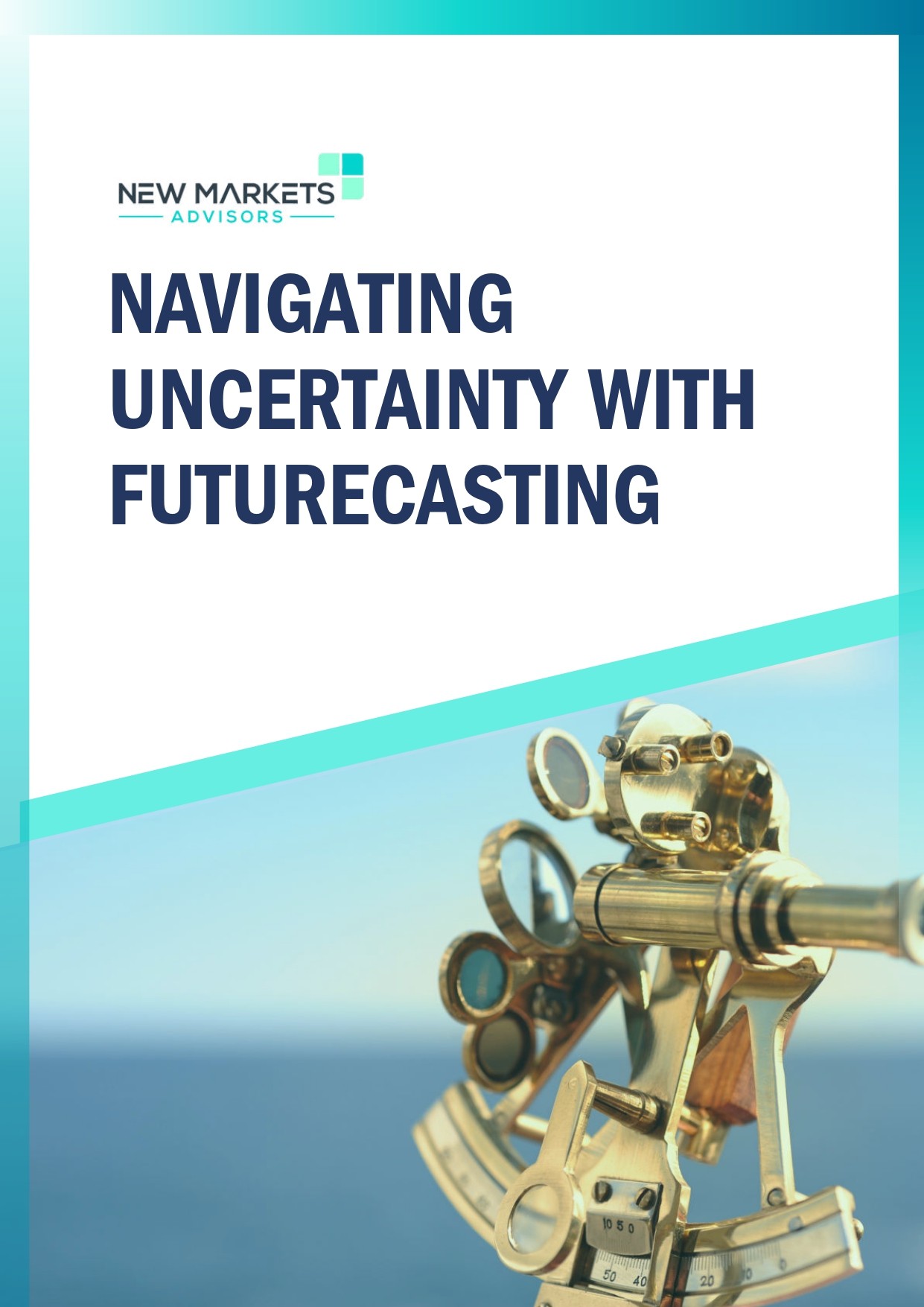
Navigating Uncertainty with FutureCasting
We developed FutureCasting to plot the future in a rigorous and actionable way by:
Help organizations translate long-term market shifts into near-term strategic actions
Drawing clear lines from macro issues to micro action implications
Not only preparing for the future, but also shaping it
SERVICE
Growth Strategy
We help companies identify and prioritize routes to profitable growth by:
Assisting hard choices about where to focus time and investment, indentifying risks to mitigate upfront
Combining Jobs to be Done segmentation, market sizing, and competitive positioning into a single, customer-centric framework
Looking for the rare but extremely profitable disruptive innovation opportunities for your product
Explore Service
Book
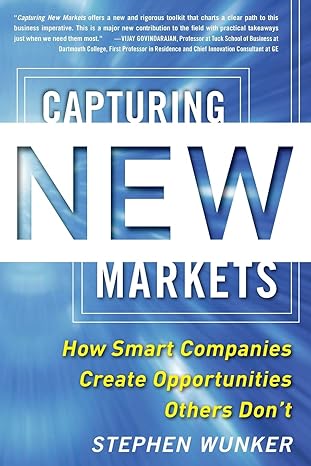
Capturing New Markets
Capturing New Markets: How Smart Companies Create Opportunities Others Don’t is a new markets strategy book by Stephen Wunker
It reveals how organizations can systematically identify unmet needs, shape demand, and dominate new industries before competitors arrive.
The book provides actionable frameworks—from white space mapping to opportunity portfolios—that turn insight into growth
Download Book's Intro
Read our latest book on Ai strategy
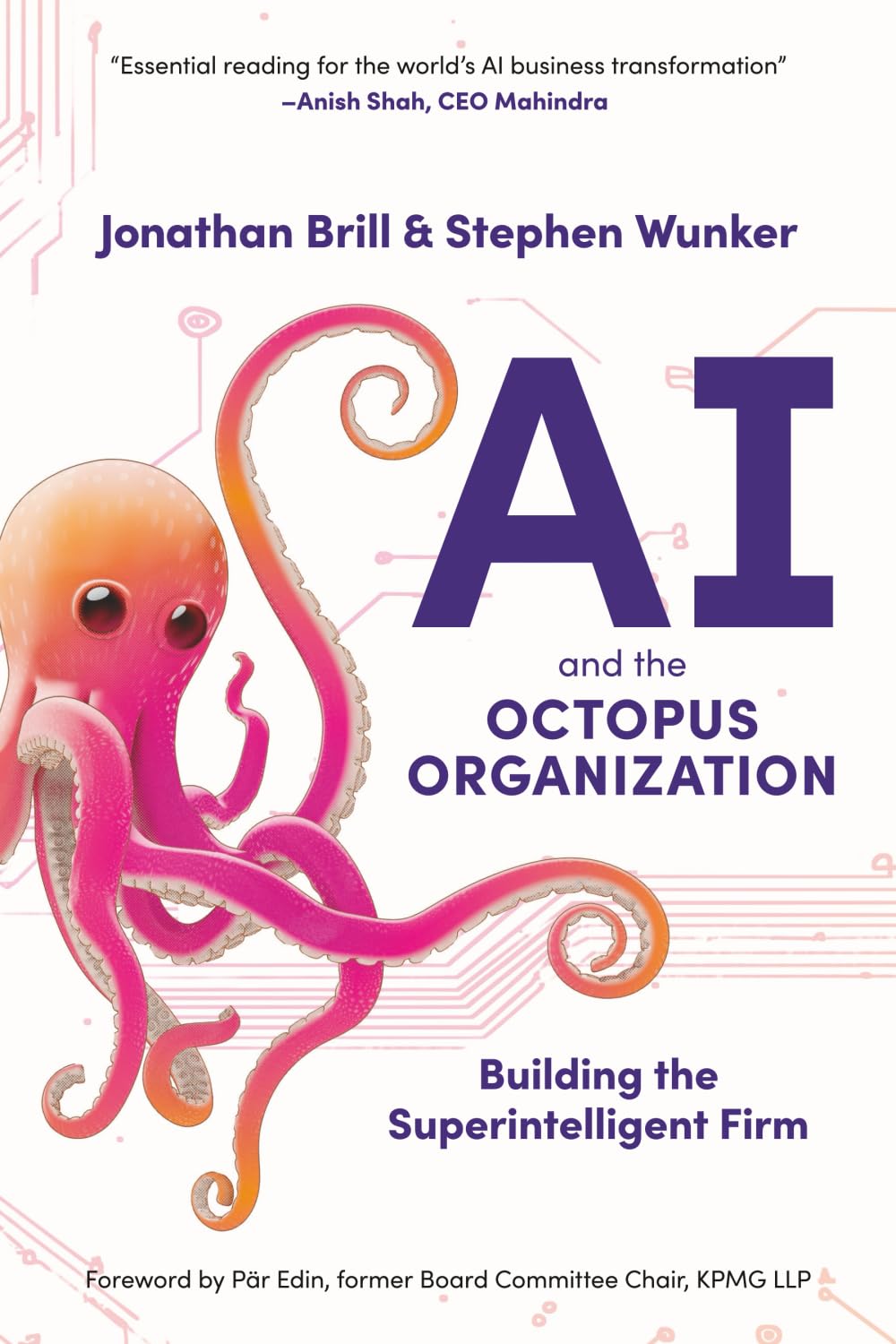
AI and The Octopus Organization: Building the Superintelligent Firm
Here’s how this framework helps leaders move from experimenting with AI to truly transforming their business:
Revealing ten types of AI innovation, from reimagining value chains to creating entirely new revenue models, that expand what’s possible.
Guiding companies to align AI strategy with real customer needs, not just technical capabilities.
Working Paper
Navigating Uncertainty with FutureCasting
We developed FutureCasting to plot the future in a rigorous and actionable way by:
Help organizations translate long-term market shifts into near-term strategic actions
Drawing clear lines from macro issues to micro action implications
Not only preparing for the future, but also shaping it
SERVICE
Growth Strategy
We help companies identify and prioritize routes to profitable growth by:
Assisting hard choices about where to focus time and investment, indentifying risks to mitigate upfront
Combining Jobs to be Done segmentation, market sizing, and competitive positioning into a single, customer-centric framework
Looking for the rare but extremely profitable disruptive innovation opportunities for your product
Explore Service
Book
Capturing New Markets
Capturing New Markets: How Smart Companies Create Opportunities Others Don’t is a new markets strategy book by Stephen Wunker
It reveals how organizations can systematically identify unmet needs, shape demand, and dominate new industries before competitors arrive.
The book provides actionable frameworks—from white space mapping to opportunity portfolios—that turn insight into growth
Download Book's Intro
Read our latest book on Ai strategy
AI and The Octopus Organization: Building the Superintelligent Firm
Here’s how this framework helps leaders move from experimenting with AI to truly transforming their business:
Revealing ten types of AI innovation, from reimagining value chains to creating entirely new revenue models, that expand what’s possible.
Guiding companies to align AI strategy with real customer needs, not just technical capabilities.
Working Paper
Navigating Uncertainty with FutureCasting
We developed FutureCasting to plot the future in a rigorous and actionable way by:
Help organizations translate long-term market shifts into near-term strategic actions
Drawing clear lines from macro issues to micro action implications
Not only preparing for the future, but also shaping it
SERVICE
Growth Strategy
We help companies identify and prioritize routes to profitable growth by:
Assisting hard choices about where to focus time and investment, indentifying risks to mitigate upfront
Combining Jobs to be Done segmentation, market sizing, and competitive positioning into a single, customer-centric framework
Looking for the rare but extremely profitable disruptive innovation opportunities for your product
Explore Service
Book
Capturing New Markets
Capturing New Markets: How Smart Companies Create Opportunities Others Don’t is a new markets strategy book by Stephen Wunker
It reveals how organizations can systematically identify unmet needs, shape demand, and dominate new industries before competitors arrive.
The book provides actionable frameworks—from white space mapping to opportunity portfolios—that turn insight into growth
Download Book's Intro
Read our latest book on Ai strategy
AI and The Octopus Organization: Building the Superintelligent Firm
Here’s how this framework helps leaders move from experimenting with AI to truly transforming their business:
Revealing ten types of AI innovation, from reimagining value chains to creating entirely new revenue models, that expand what’s possible.
Guiding companies to align AI strategy with real customer needs, not just technical capabilities.
Working Paper
Navigating Uncertainty with FutureCasting
We developed FutureCasting to plot the future in a rigorous and actionable way by:
Help organizations translate long-term market shifts into near-term strategic actions
Drawing clear lines from macro issues to micro action implications
Not only preparing for the future, but also shaping it
SERVICE
Growth Strategy
We help companies identify and prioritize routes to profitable growth by:
Assisting hard choices about where to focus time and investment, indentifying risks to mitigate upfront
Combining Jobs to be Done segmentation, market sizing, and competitive positioning into a single, customer-centric framework
Looking for the rare but extremely profitable disruptive innovation opportunities for your product
Explore Service
Book
Capturing New Markets
Capturing New Markets: How Smart Companies Create Opportunities Others Don’t is a new markets strategy book by Stephen Wunker
It reveals how organizations can systematically identify unmet needs, shape demand, and dominate new industries before competitors arrive.
The book provides actionable frameworks—from white space mapping to opportunity portfolios—that turn insight into growth
Download Book's Intro
Read our latest book on Ai strategy
AI and The Octopus Organization: Building the Superintelligent Firm
Here’s how this framework helps leaders move from experimenting with AI to truly transforming their business:
Revealing ten types of AI innovation, from reimagining value chains to creating entirely new revenue models, that expand what’s possible.
Guiding companies to align AI strategy with real customer needs, not just technical capabilities.
working paper
Navigating Uncertainty with FutureCasting
We developed FutureCasting to plot the future in a rigorous and actionable way by:
Help organizations translate long-term market shifts into near-term strategic actions
Drawing clear lines from macro issues to micro action implications
Not only preparing for the future, but also shaping it
service
Growth Strategy
We help companies identify and prioritize routes to profitable growth by:
Assisting hard choices about where to focus time and investment, indentifying risks to mitigate upfront
Combining Jobs to be Done segmentation, market sizing, and competitive positioning into a single, customer-centric framework
Looking for the rare but extremely profitable disruptive innovation opportunities for your product
Explore Service
book
Capturing New Markets
Capturing New Markets: How Smart Companies Create Opportunities Others Don’t is a new markets strategy book by Stephen Wunker
The book provides actionable frameworks—from white space mapping to opportunity portfolios—that turn insight into growth
It reveals how organizations can systematically identify unmet needs, shape demand, and dominate new industries before competitors arrive.
Download Book's Intro
working paper
Navigating Uncertainty with FutureCasting
We developed FutureCasting to plot the future in a rigorous and actionable way by:
Help organizations translate long-term market shifts into near-term strategic actions
Drawing clear lines from macro issues to micro action implications
Not only preparing for the future, but also shaping it
service
Growth Strategy
We help companies identify and prioritize routes to profitable growth by:
Assisting hard choices about where to focus time and investment, indentifying risks to mitigate upfront
Combining Jobs to be Done segmentation, market sizing, and competitive positioning into a single, customer-centric framework
Looking for the rare but extremely profitable disruptive innovation opportunities for your product
Explore Service
book
Capturing New Markets
Capturing New Markets: How Smart Companies Create Opportunities Others Don’t is a new markets strategy book by Stephen Wunker
The book provides actionable frameworks—from white space mapping to opportunity portfolios—that turn insight into growth
It reveals how organizations can systematically identify unmet needs, shape demand, and dominate new industries before competitors arrive.
Download Book's Intro
working paper
Navigating Uncertainty with FutureCasting
We developed FutureCasting to plot the future in a rigorous and actionable way by:
Help organizations translate long-term market shifts into near-term strategic actions
Drawing clear lines from macro issues to micro action implications
Not only preparing for the future, but also shaping it
service
Growth Strategy
We help companies identify and prioritize routes to profitable growth by:
Assisting hard choices about where to focus time and investment, indentifying risks to mitigate upfront
Combining Jobs to be Done segmentation, market sizing, and competitive positioning into a single, customer-centric framework
Looking for the rare but extremely profitable disruptive innovation opportunities for your product
Explore Service
book
Capturing New Markets
Capturing New Markets: How Smart Companies Create Opportunities Others Don’t is a new markets strategy book by Stephen Wunker
The book provides actionable frameworks—from white space mapping to opportunity portfolios—that turn insight into growth
It reveals how organizations can systematically identify unmet needs, shape demand, and dominate new industries before competitors arrive.
Download Book's Intro
working paper
Navigating Uncertainty with FutureCasting
We developed FutureCasting to plot the future in a rigorous and actionable way by:
Help organizations translate long-term market shifts into near-term strategic actions
Drawing clear lines from macro issues to micro action implications
Not only preparing for the future, but also shaping it
service
Growth Strategy
We help companies identify and prioritize routes to profitable growth by:
Assisting hard choices about where to focus time and investment, indentifying risks to mitigate upfront
Combining Jobs to be Done segmentation, market sizing, and competitive positioning into a single, customer-centric framework
Looking for the rare but extremely profitable disruptive innovation opportunities for your product
Explore Service
book
Capturing New Markets
Capturing New Markets: How Smart Companies Create Opportunities Others Don’t is a new markets strategy book by Stephen Wunker
The book provides actionable frameworks—from white space mapping to opportunity portfolios—that turn insight into growth
It reveals how organizations can systematically identify unmet needs, shape demand, and dominate new industries before competitors arrive.
Download Book's Intro
Working paper
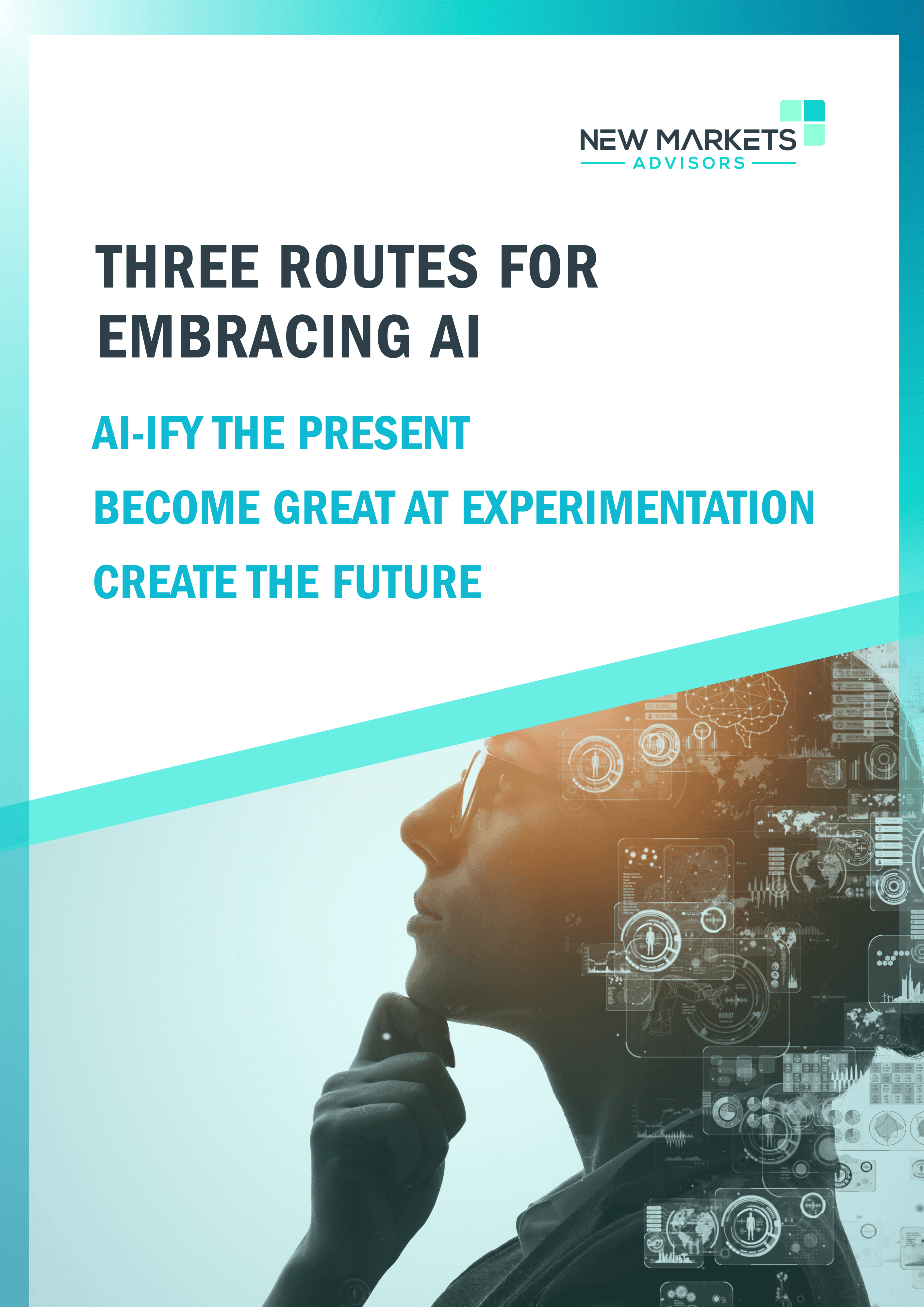
Three Routes for Embracing AI
The Three Routes framework helps organizations lead in the AI Age by:
Applying AI to existing operations to drive measurable productivity gains while staying centered on customer Jobs and system design
Building experimentation muscle—using structured hypotheses, rapid testing, and strong governance to learn fast and scale what works
Creating the future through strategic foresight, scenario planning, and portfolio thinking that turn uncertainty into long-term growth
Download PDF



our Industries
Trusted by Global Leaders for Proven Growth Strategies
Our growth strategy clients range from international leaders to promising startups across our four key industries:

Frequently Asked Questions
How is AI changing product management?
AI is changing product management by making building cheap and fast. Teams can now generate specifications, analyses, and working prototypes in hours, so the constraint has moved upstream to judgment about what deserves investment at all. Three shifts follow: judgment becomes the bottleneck, the roadmap becomes a learning system rather than a delivery calendar, and the role splits between broad integrators and deep domain specialists.
How should product roadmaps change in the age of AI?
What skills do product managers need in the AI era?
How does Jobs to Be Done apply to AI product development?
What should a product manager job description include in the AI era?
AI replacing product managers?
How is AI changing product management?
AI is changing product management by making building cheap and fast. Teams can now generate specifications, analyses, and working prototypes in hours, so the constraint has moved upstream to judgment about what deserves investment at all. Three shifts follow: judgment becomes the bottleneck, the roadmap becomes a learning system rather than a delivery calendar, and the role splits between broad integrators and deep domain specialists.
How should product roadmaps change in the age of AI?
What skills do product managers need in the AI era?
Costovation - Discover How To Build Low-Cost Business That Customer Love
What should a product manager job description include in the AI era?
AI replacing product managers?


AI Strategy
Helping a tech giant revamp its AI strategy and area of focus
AI Strategy
Helping a tech giant revamp its AI strategy and area of focus

AI Strategy
How a leading tech company crafted its strategy to lead in emerging businesses
AI Strategy
How a leading tech company crafted its strategy to lead in emerging businesses









Connect With Us
Let's Talk
Fill out the form below to start the conversation about working with New Markets Advisors

Connect With Us
Let's Embrace AI Together
Fill out the form below to start the conversation about working with New Markets Advisors

Executive Takeaway 💡
FutureCasting is a strategic foresight methodology that helps organizations explore alternative futures, map uncertainty, and translate long-term market shifts into near-term strategic actions. It helps leadership teams improve market positioning by identifying emerging customer needs, competitive threats, innovation opportunities, and signals that indicate when to adapt strategy. (too ai)
What should a product roadmap manage when building is easy?
A product roadmap should manage learning, not just delivery. Most still organize features, teams, and dates around a unit of output, e.g. build this capability by this quarter. That made sense when an early design took weeks and a release took months, and when scarce capacity forced a company into a few bets it could then plan around.
What a learning roadmap records
Five things, for every significant initiative:
The targeted Jobs to be Done, and the assumption about why that group of Jobs matters
The evidence gathered so far
The next cheap experiment that could change th team's confidence
The stopping rule
The evidence required to justify greater investment
Dates retain an important role. They mark evidence reviews, investment decisions, and market deadlines. What they should stop doing is lending false precision to a solution chosen before the learning happened.
Measure how fast you can find out you were wrong
A roadmap built this way changes what progress means. Shipping still counts, but it becomes one stage in a longer process. The sharper question is how quickly a team can expose and settle its riskiest assumptions.
A clickable prototype can show whether customers understand an experience. It says nothing about reliability, willingness to pay, unit economics, security, or regulatory feasibility. Because AI makes artifacts look convincing earlier, rapid experimentation can quietly degrade into rapid storytelling, with a polished mockup lending a weak idea the appearance of maturity.
Which is why stopping deserves a more respectable place in product governance. Ending an unpromising initiative protects capital, customer attention, and maintenance capacity.
Know Yourself 💡
Knowing your environment includes knowing your own organization. Make sure to pressure-test any assumptions your team may have about your value proposition, strengths, and weaknesses through both internal and external input.
Why is the product manager role splitting into a barbell?
The role is splitting because AI made breadth cheap and judgment expensive at the same time. Those two pull in opposite directions, and most organizations are trying to resolve them inside a single person.
A PM now moves across design, engineering, analytics, and go-to-market with far fewer handoffs than the role once demanded. More than being product management, the role is now more appropriately conceived as product developer.
Yet there is also an opposite construct: agents absorb the execution, while people divide into domain specialists who oversee agents in their own area and orchestrators who connect the outputs across functions.
Both these views actually describe the same shape, from opposite ends.

The two ends of the barbell
A product integrator is a product manager who moves from a customer problem to a prototype, a data query, or a launch experiment without waiting on handoffs, holding the product coherent as work crosses disciplines. One PM we interviewed at JPMorganChase, for instance, noticed that fast-moving teams were designing first and documenting later, losing their requirements as they iterated directly in Figma. So she built a tool that reads the design files and generates the documentation from them — tooling a product manager would once have requested from engineering and quite possibly never received.
A domain steward is a product manager with deep expertise in a market, technology, or risk environment, who knows where the edge cases live and when a polished answer is dangerously incomplete.
Organizations will need both. The mistake is assuming they need both in the same person.
Product Integrator Domain Steward
Core value Moves from a customer problem to a prototype, a data query, or a launch experiment with few handoffs Knows where the edge cases live and when a polished answer is dangerously incomplete
Scarce skill Framing a customer's Jobs to be Done and seeing how a decision in one discipline lands in another Deep expertise in a market, technology, or risk environment
Fits best Consumer applications and reversible decisions Regulated platforms and high-stakes workflows
Failure mode Confidently wrong, at speed Becoming a review queue that recreates the handoffs AI just removed
Advances by Framing ambiguous problems, synthesizing across functions, holding the product coherent Developing rare judgment, setting standards, resolving the difficult calls
Don't write the superhuman job description
The easy organizational response is to lengthen the job description: one person to prototype, inspect code, analyze data, run customer research, shape the launch, and coordinate every stakeholder. That confuses technological reach with human capacity.
The danger has been quantified. In a Harvard Business School field experiment involving 758 consultants, participants using AI finished suitable tasks over 25% faster and produced work rated over 40% higher in quality. On a task outside AI's effective frontier, they were 19% less likely to reach the correct answer. A generalist can now acquire remarkable reach and become confidently wrong, at speed, with a prototype that looks finished while ignoring accessibility, architecture, privacy, or regulation.
Product professionals see it coming. In a 2026 survey, 73% expected product management roles to become more hybrid, while 47% named unrealistic expectations for product managers as a concern.
Three choices help.
• Set the mix by product context. A consumer application built on reversible decisions can lean toward integrators. A regulated platform or a high-stakes workflow needs stronger stewardship. Every product area needs both ends, but the proportions vary.
• Define decision rights. Integrators should know what they may investigate, test, and ship on their own, with steward review at explicit thresholds tied to risk and consequence. Requiring specialist approval for every small experiment recreates the handoffs AI just eliminated. On the flipside, letting every experiment become a release invites fast, expensive mistakes.
• Build two career paths. Integrators advance by framing ambiguous problems, synthesizing across functions, and holding the product coherent. Stewards advance by developing rare judgment, setting standards, and resolving the difficult calls.
Some exceptional product managers will represent both ends of the barbell. But designing the profession around them will can produce exhaustion and superficiality.
What should product leaders do now?
The three shifts are one AI Age revolution seen from three angles. When execution stops being the bottleneck, the constraint becomes the quality of your decisions, the impact of your learning, and the design of the people doing both.
That has an organizational consequence. Teams now devise AI-enabled workflows faster than any central group can approve them, so the workable division of labor is for leadership to set the limits — approved tools, data rules, quality standards, investment priorities — and for product teams to run the experiments inside them.
Rivals can copy a feature they can see. They have a much harder time copying a better grasp of why customers choose, struggle, switch, or simply go without.
Winning product organizations won’t necessarily have more ideas or outputs. Their edge will come from spotting the few worth concertedly pursuing, and from knowing customers well enough to say why.
Move Away from the Best / Worst Case Scenario💡
A common approach is to build worst-, middle-, best- case scenarios. The intent is right: you consider all possible outcomes, including those that are less than ideal. However, this method assumes that there is only a single kind of best-, middle-, and worst-case scenario. In reality, different trends could collide to form a host of scenarios, many of which could be overwhelmingly positive or negative
Applying FutureCasting to Retail Banking

With the rise of fintechs and increasing importance of convenience, a retail bank could use FutureCasting to devise its channel strategy with the long-term goal of increasing customer loyalty.

Our Offices
50 Franklin St
2nd Floor
Boston, MA 02110
USA
151 San Francisco St
Suite 200
San Juan, PR 00901 Puerto Rico
Rua Antónia Andrade 4
3 Direito
1170-025 Lisboa
Portugal

Our Offices
50 Franklin St
2nd Floor
Boston, MA 02110
USA
151 San Francisco St
Suite 200
San Juan, PR 00901 Puerto Rico
Rua Antónia Andrade 4
3 Direito
1170-025 Lisboa
Portugal
Our Offices
50 Franklin St
2nd Floor
Boston, MA 02110
USA
151 San Francisco St
Suite 200
San Juan, PR 00901 Puerto Rico
Rua Antónia Andrade 4
3 Direito
1170-025 Lisboa
Portugal
Our Offices
50 Franklin St
2nd Floor
Boston, MA 02110 USA
151 San Francisco St
Suite 200
San Juan, PR 00901 Puerto Rico
Rua Antónia Andrade 4
3 Direito
1170-025 Lisboa
Portugal
Get In Touch
+1 617 936 4035
info@newmarketsadvisors.com